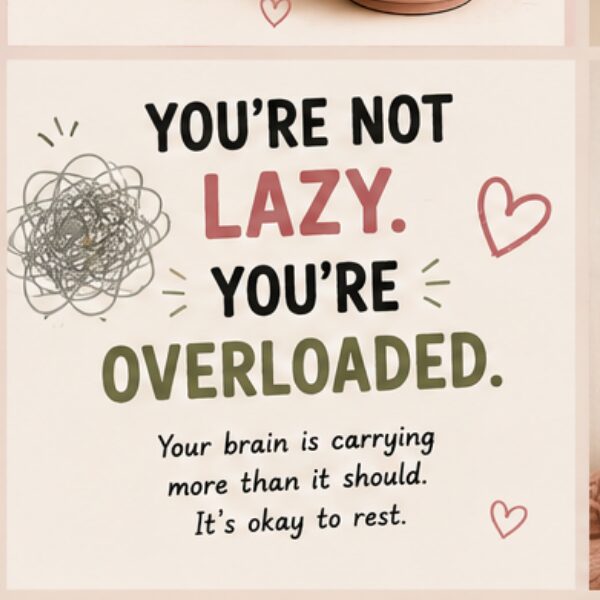
Most adults are not lazy.
They are overloaded.
That’s the part modern productivity culture keeps missing.
Because adulthood is not just:
- doing tasks
- paying bills
- cleaning things
- answering emails
It’s managing:
- mental tabs
- invisible responsibilities
- emotional exhaustion
- constant decisions
- life admin
- survival mode
- overstimulation
- remembering everything all the time forever apparently
And eventually?
Your nervous system starts building tiny survival systems whether you realize it or not.
That’s why adults develop:
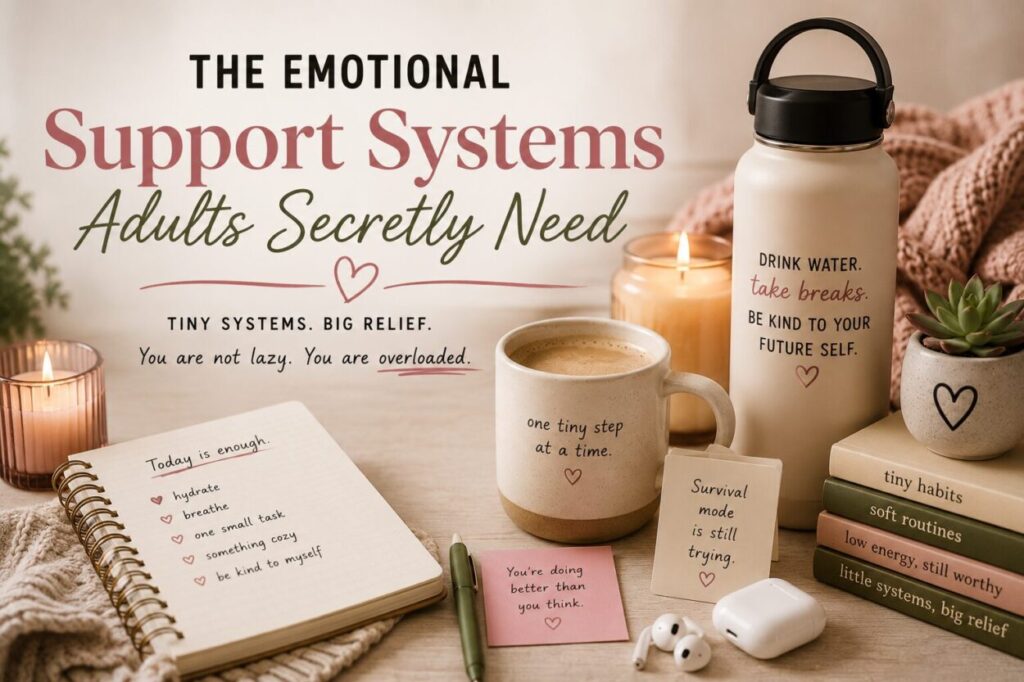
- emotional support water bottles
- emotional support hoodies
- emotional support playlists
- emotional support candles
- emotional support beverages
- emotional support grocery store trips
- emotional support Target runs
- emotional support “little treats”
Because modern life is exhausting.
And tiny systems become survival tools.
This is not weakness.
Honestly?
It’s adaptation.
So if you’ve ever:
- needed silence immediately
- cried over an email
- emotionally bonded with a specific hoodie
- relied on tiny routines to stay functional
- needed a “reset day”
- felt exhausted by simple tasks
welcome.
You are deeply normal.
This is the emotional support system guide nobody gave us.
Adults Quietly Build Survival Systems
One of the strangest parts of adulthood is realizing:
most people are privately creating tiny systems just to remain emotionally functional.
Not optimized.
Not thriving.
Just…
operational.
And honestly?
That makes sense.
Because modern adults are expected to:
- work constantly
- stay reachable 24/7
- remember appointments
- manage finances
- maintain relationships
- clean homes
- regulate emotions
- answer messages
- plan meals
- maintain routines
- survive capitalism
- drink enough water somehow
all while pretending they’re not overwhelmed.
Of COURSE people develop emotional support systems.
Emotional Support Water Bottles Are Real
At some point adults stop carrying water bottles…
and start emotionally depending on them.
Suddenly:
- the correct water bottle matters
- emotional stability improves when it’s nearby
- hydration becomes personality-adjacent
- losing it feels psychologically devastating
And honestly?
That makes complete sense.
Because tiny comforts create:
- predictability
- familiarity
- grounding
- routine
Your nervous system LOVES predictable comfort objects.
Especially during overwhelming periods.
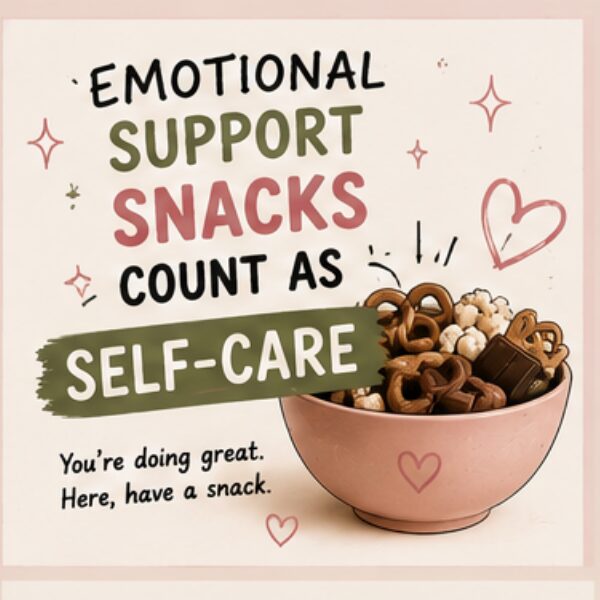
The Psychology of “Little Treats”
Modern adulthood has created an entire emotional economy based on:
tiny rewards for surviving basic life.
Examples:
- overpriced coffee
- favorite snacks
- candles
- drive-thru beverages
- cozy blankets
- bookstore trips
- unnecessary stickers
- iced coffee emotional recovery
People joke about “little treat culture.”
But psychologically?
Tiny rewards genuinely help humans regulate stress.
Especially when life feels:
- repetitive
- exhausting
- emotionally heavy
- overstimulating
Small joys interrupt survival mode.
That matters more than people realize.
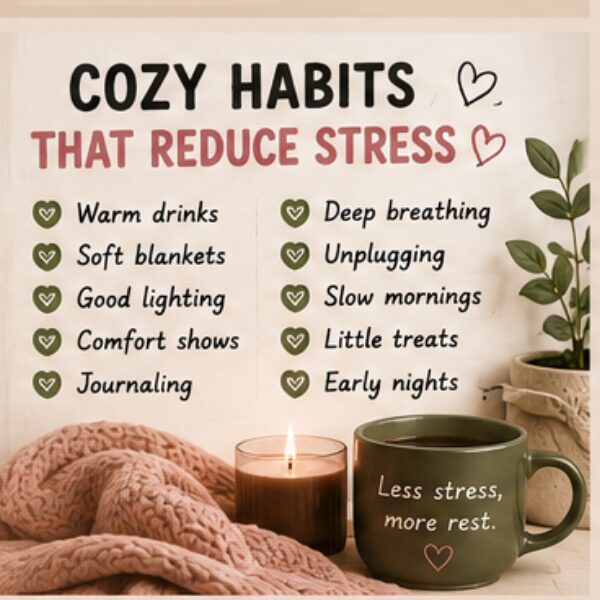
Why Adults Become Obsessed with Cozy Things
There’s a reason adults suddenly care deeply about:
- blankets
- lighting
- pajamas
- candles
- couch corners
- weighted blankets
- soft socks
- ambient music
Because adulthood is overstimulating.
And cozy environments reduce nervous system stress.
That’s not dramatic.
That’s biology.
Your brain constantly scans for:
- safety
- predictability
- comfort
- regulation
Which explains why many adults unintentionally turn their homes into:
tiny emotional recovery centers.
Honestly?
That’s smart.
Burnout Makes Basic Tasks Feel Impossible
This is one of the most misunderstood parts of adulthood.
People assume:
if a task is small,
it should feel easy.
That is not how burnout works.
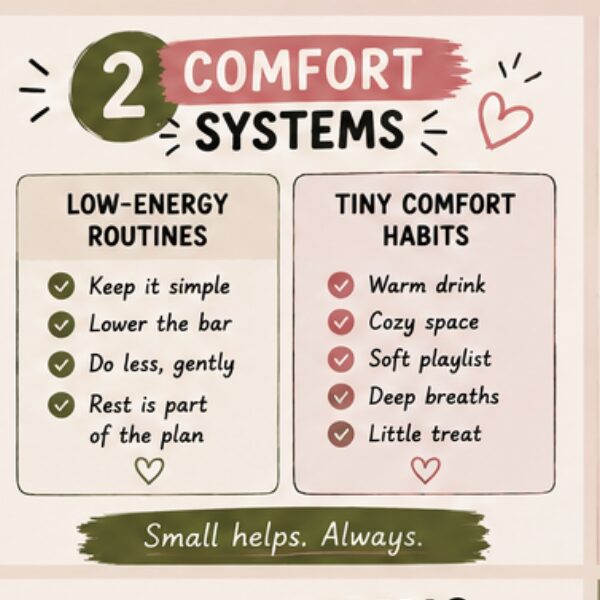
Burnout does NOT only affect:
- motivation
- ambition
- productivity
It affects:
- executive function
- emotional regulation
- task initiation
- decision-making
- energy management
Which means sometimes:
replying to one email feels psychologically enormous.
Not because you’re lazy.
Because your brain is overloaded.
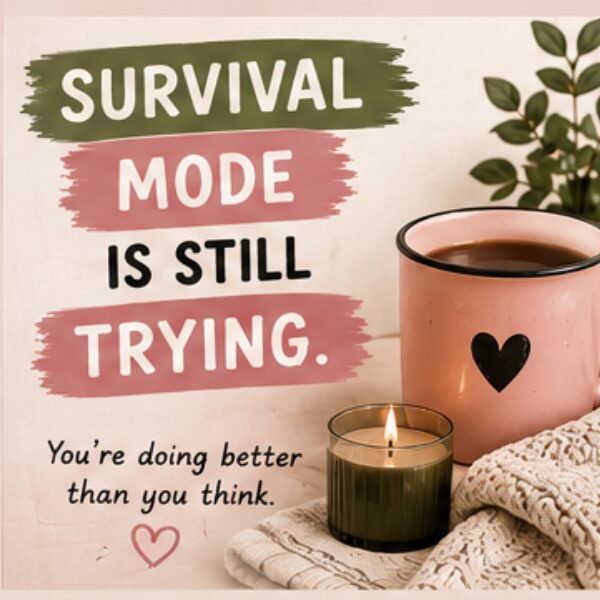
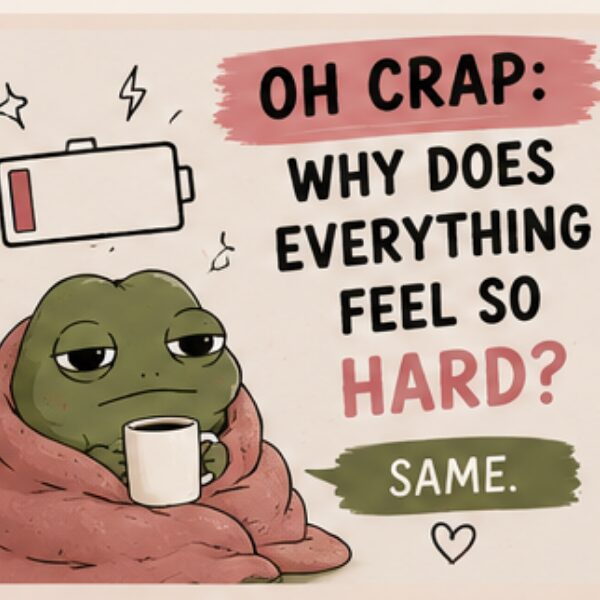
The “Everything Feels Heavy” Phase
Many adults quietly go through periods where:
- dishes feel impossible
- laundry feels emotionally overwhelming
- grocery shopping feels exhausting
- texts go unanswered
- small tasks pile up
- life admin becomes unbearable
And the worst part?
People often shame themselves for this.
But realistically?
Humans were not designed for:
constant notifications
constant accessibility
constant decision-making
constant emotional pressure
constant information overload
Of course people are tired.
Survival Mode Changes Your Brain
When stress becomes chronic,
your nervous system shifts toward:
survival efficiency.
Which means:
- basic tasks feel harder
- concentration drops
- memory weakens
- motivation disappears
- overwhelm increases
Your brain is trying to conserve energy.
Unfortunately,
modern life interprets exhaustion as moral failure.
Instead of:
a nervous system asking for support.
Tiny Systems Save Mental Energy
This is where emotional support systems become powerful.
Because tiny systems reduce:
- decision fatigue
- mental friction
- cognitive overload
And honestly?
That matters more than motivation.
Future You Systems
One of the best adulthood survival skills is:
helping Future You.
Future You is:
- tired
- overstimulated
- emotionally cooked
- trying their best
Tiny acts of support matter.
Examples:
- filling water bottles before bed
- laying out clothes early
- prepping coffee at night
- setting reminders immediately
- keeping duplicates of essentials
- simplifying repetitive tasks
These things seem small.
But small reductions in friction change EVERYTHING over time.
Visual Systems Work Better Than Invisible Systems
Many adults struggle because traditional organization advice assumes people naturally remember things.
A lot of people don’t.
Especially:
- ADHD adults
- overwhelmed adults
- burned-out adults
- anxious adults
Visible systems reduce mental load.
Examples:
- open baskets
- clear containers
- visible reminders
- labeled bins
- sticky notes
- accessible storage
The goal is not aesthetic perfection.
The goal is:
reducing mental effort.
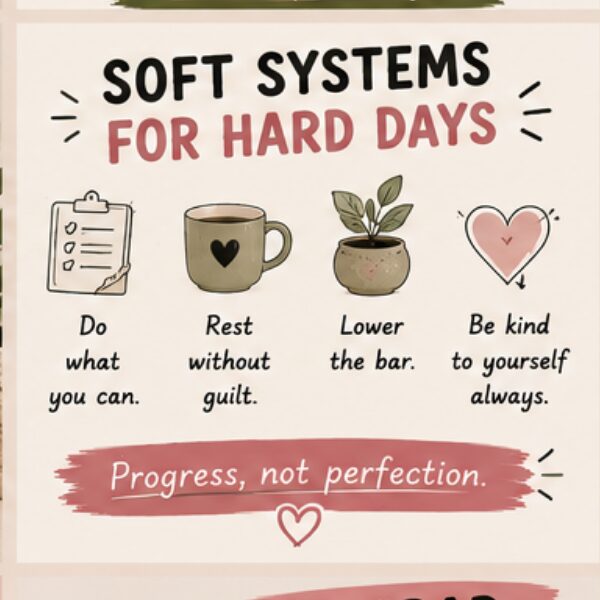
“Good Enough” Systems Matter
Perfection-based systems usually fail.
Because they rely on:
- endless motivation
- perfect consistency
- high energy
Real life is not built that way.
The best systems are:
- flexible
- forgiving
- low-pressure
- sustainable
Examples:
- “better than nothing” resets
- partial cleaning
- tiny routines
- low-energy habits
- survival mode shortcuts
Functionality matters more than perfection.
Every single time.
Why Simple Tasks Feel Emotionally Bigger Than They Should
Ever notice how tiny tasks sometimes feel:
weirdly emotionally loaded?
Examples:
- replying to emails
- making appointments
- scheduling things
- returning packages
- folding laundry
- checking bank accounts
This happens because adulthood attaches:
responsibility + consequences + pressure
to almost everything.
Tiny tasks stop feeling tiny when your brain associates them with:
- guilt
- failure
- overwhelm
- pressure
- avoidance
That emotional buildup is real.
Decision Fatigue Is Destroying Everyone Quietly
Adults make:
thousands of tiny decisions constantly.
What to eat.
What to wear.
What to answer first.
What to prioritize.
What to ignore.
What to postpone.
What to buy.
What to remember.
Over time?
Decision fatigue depletes mental energy dramatically.
Which is why:
- routines help
- systems help
- habits help
- simplicity helps
Reducing unnecessary decisions creates emotional breathing room.
Rest Is Productive Actually
Modern culture treats rest like:
something you earn AFTER becoming fully optimized.
Which is absurd.
Humans require rest BEFORE breaking.
Not after.
Rest:
- improves cognitive function
- regulates emotions
- restores energy
- supports memory
- improves focus
And honestly?
Doing nothing sometimes is incredibly productive for an overwhelmed nervous system.
Comfort Is Not Weakness
This matters deeply.
Many adults secretly feel guilty for needing:
- comfort routines
- recovery time
- quiet
- softness
- low-energy days
- emotional support systems
But humans have ALWAYS created comfort systems.
That’s normal.
People need:
- safety
- familiarity
- rest
- regulation
- community
- recovery
Especially during difficult periods.
Comfort is not laziness.
Comfort is maintenance.
Your Systems Don’t Need to Look Impressive
This is important.
A system does not need to:
- look aesthetic
- feel productive
- impress other people
- match internet standards
If it helps you function?
It matters.
Examples:
- laundry baskets everywhere
- reminder alarms
- frozen meals
- paper plates during burnout
- comfort shows
- “safe foods”
- backup chargers
- emotional support playlists
The goal is:
support.
Not performance.
The Real Secret About Functioning as an Adult
Most adults are not succeeding because they:
“have it all together.”
They’re succeeding because they:
- build support systems
- reduce friction
- create routines
- simplify life
- learn recovery
- stop expecting perfection
That’s the real adulthood secret.
Not optimization.
Support.
Sustainable > Impressive
A sustainable life beats an impressive-looking life.
Every single time.
Because burnout eventually destroys unsustainable systems.
Tiny supportive habits matter more than:
dramatic productivity bursts.
And honestly?
The adults who seem most functional are usually just:
better at creating support systems.
Not superhuman.
Final Thoughts
If you currently rely on:
- emotional support drinks
- comfort routines
- cozy environments
- tiny reset systems
- survival habits
- “little treats”
- reminder systems
- low-energy shortcuts
you are not failing adulthood.
You are adapting to it.
Modern life is genuinely overwhelming.
And tiny emotional support systems are often what help people:
- stay functional
- stay grounded
- stay emotionally regulated
- keep going
So here’s your reminder:
You are allowed to:
- rest
- simplify
- need comfort
- reduce friction
- build weird little systems
- survive before optimizing
- create support structures that actually work for YOU
Because adulthood is not about becoming endlessly productive.
It’s about building a life your nervous system can survive inside.
One tiny emotional support system at a time.
Related Survival Guides
- Why Does Every Adult Feel Exhausted All the Time?
- Tiny Adulting Habits That Make Life WAY Easier
- The Invisible Mental Load of Adulthood
- Tiny Systems That Save My Mental Health
- Why Simple Tasks Feel So Hard Sometimes
- The Future You Method
- Burnout Makes Basic Tasks Feel Impossible
- Rest Is Productive Actually
- Realistic Systems for Overwhelmed Adults
- The Psychological Importance of Little Treats
Emotional Support Tools
Trying to make adulthood feel slightly more manageable?
Explore:
- burnout-friendly planners
- reset systems
- emotional regulation printables
- ADHD-friendly routines
- low-energy survival systems
- comfort-focused planning tools
- life admin trackers
Because honestly?
Most adults don’t need more pressure.
They need more support.