THE WRITER’S RETREAT
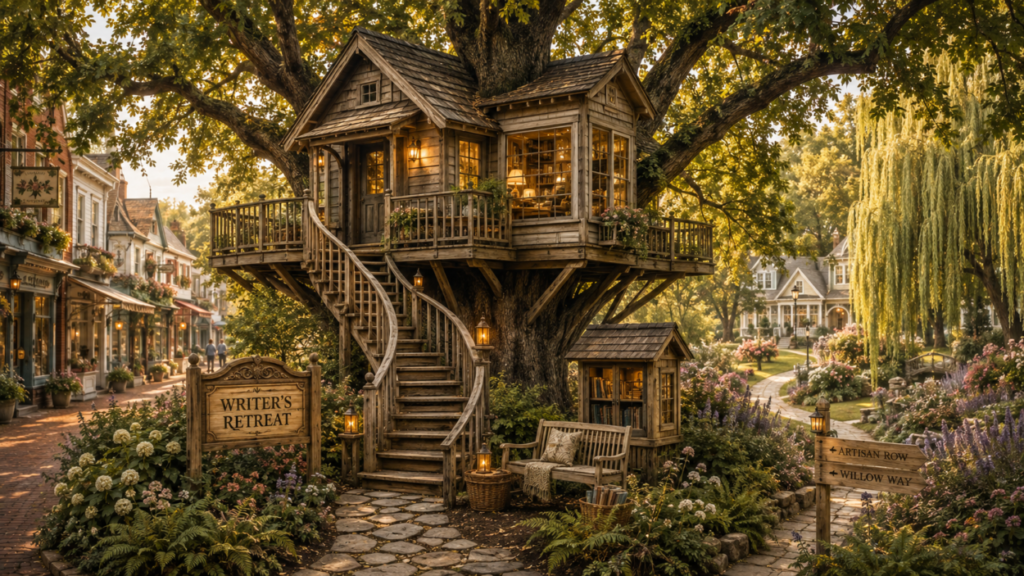
The Writing Room
Sometimes the best way forward is simply to begin.
Welcome to the Writing Room, a quiet corner of the Writer’s Retreat created for writing sprints, creative challenges, seasonal projects, shared goals, and gentle accountability.
Come in when your story needs attention, your motivation needs company, or the blinking cursor has spent entirely too long judging your life choices.
You do not need a perfect outline, an uninterrupted afternoon, or permission to call yourself a writer.
You only need a few minutes and a place to begin.
Choose Your Writing Challenge
You do not need a free weekend, a perfect outline, or the sudden arrival of a highly organized personality.
Choose a challenge that fits the time and energy you have today. Open the card, follow the instructions, and give your story a little attention.
Ten-Minute Writing Sprint
Set a timer for ten minutes.
Choose one scene, paragraph, character thought, or unfinished idea.
Write continuously until the timer ends. Do not stop to edit, research, change fonts, reorganize your outline, or suddenly decide the kitchen needs deep cleaning.
The only goal is to keep the words moving.
Fifteen-Minute Scene Sprint
Pick a scene you have been avoiding or one you have not started.
Set a timer for fifteen minutes.
Write what happens, who is present, and what changes by the end of the scene.
It does not have to be polished. It only has to exist.
The 500-Word Challenge
Open your current project and write 500 new words.
They can be dialogue, description, internal thoughts, backstory, or a scene you are not even sure you will keep.
No deleting until you reach 500.
Yes, questionable words count. They can face judgment during editing.
Finish the Scene
Find a scene you abandoned halfway through.
Reread only enough to remember what was happening.
Decide what the character wants, what stands in the way, and what needs to happen before the scene ends.
Then finish it before opening another project.
Seven-Day Writing Streak
Write for at least ten minutes each day for the next seven days.
The word count does not matter. The writing location does not matter. A notebook, phone note, laptop, or scrap of paper all qualify.
Your only job is to show up seven times.
Miss a day? Begin again without holding a disciplinary hearing.
Edit One Chapter
Choose one chapter, scene, or manageable section of your manuscript.
Read through it once without changing anything.
On the second pass, improve clarity, remove repetition, tighten dialogue, and note anything that still needs attention.
Stop when that section is finished. Editing the entire book was not part of the assignment.
This Season’s Writing Challenge
Every season gives a story something different to work with.
For fall, settle in with changing leaves, unfamiliar visitors, old secrets, and the possibility that something in your fictional town is not quite what it seems.
Seven Days of Autumn
Write for at least ten minutes each day. Follow the prompts in order to develop one connected story, or use them independently if your imagination insists on taking the scenic route.
Day One: The First Cold Morning
Your character returns to a place they have carefully avoided for years. Something there is different.
Day Two: The Lost Object
A familiar item appears somewhere it should not be. Your character recognizes it immediately.
Day Three: The Unexpected Visitor
Someone arrives with a message, request, or warning that complicates everything.
Day Four: After Dark
A sound, shadow, strange light, or unexpected discovery changes what your character thought they understood.
Day Five: The Secret
Someone admits they have known more than they were willing to say.
Day Six: The Choice
Your character must choose between what feels safe and what might finally reveal the truth.
Day Seven: The Last Leaf
Bring the story to a conclusion—or reveal that the real story is only beginning.
The Writers’ Table
Writing can be a solitary process, but that does not mean you have to figure out every difficult chapter alone.
The Writers’ Table is where creative neighbors gather to share progress, compare notes, celebrate small victories, and remind each other that unfinished drafts are not moral failures.
Bring the paragraph you finally finished.
Bring the plot problem your characters refuse to solve.
Bring the ambitious seven-day writing streak—or the confession that you spent an entire afternoon researching medieval bread instead of working on your manuscript.
There is room at the table for all of it.
Keep Your Writing Moving
A challenge can help you get started. The right tools can help you keep going.
Explore practical resources for developing characters, organizing ideas, finishing stories, and giving your writing the attention it deserves.
Character Planner
Get to know the people in your story, explore their motivations, and organize the details that make them feel real.
Children’s Book Publishing Workbook
Turn your children’s book idea into a practical plan with guidance for developing, preparing, and publishing your story.
StoryForge System
Work through story ideas, character development, plot problems, and creative roadblocks with practical AI-assisted writing support.
What Will You Write Next?
Every finished story begins with someone deciding to spend a little more time with an unfinished one.
Choose another challenge, pull a fresh prompt, or return to the Writer’s Retreat for tools and inspiration.
Whether you wrote ten words or an entire chapter, you showed up.
That counts for more than you think.