Most adults assume mental exhaustion comes from:
big problems.
Major life events.
Huge responsibilities.
Stressful situations.
And yes, those things absolutely matter.
But honestly?
A surprising amount of mental exhaustion comes from:
tiny things.
Small decisions.
Small interruptions.
Small unfinished tasks.
Small responsibilities.
None feel overwhelming individually.
Together?
They quietly drain your mental energy every single day.
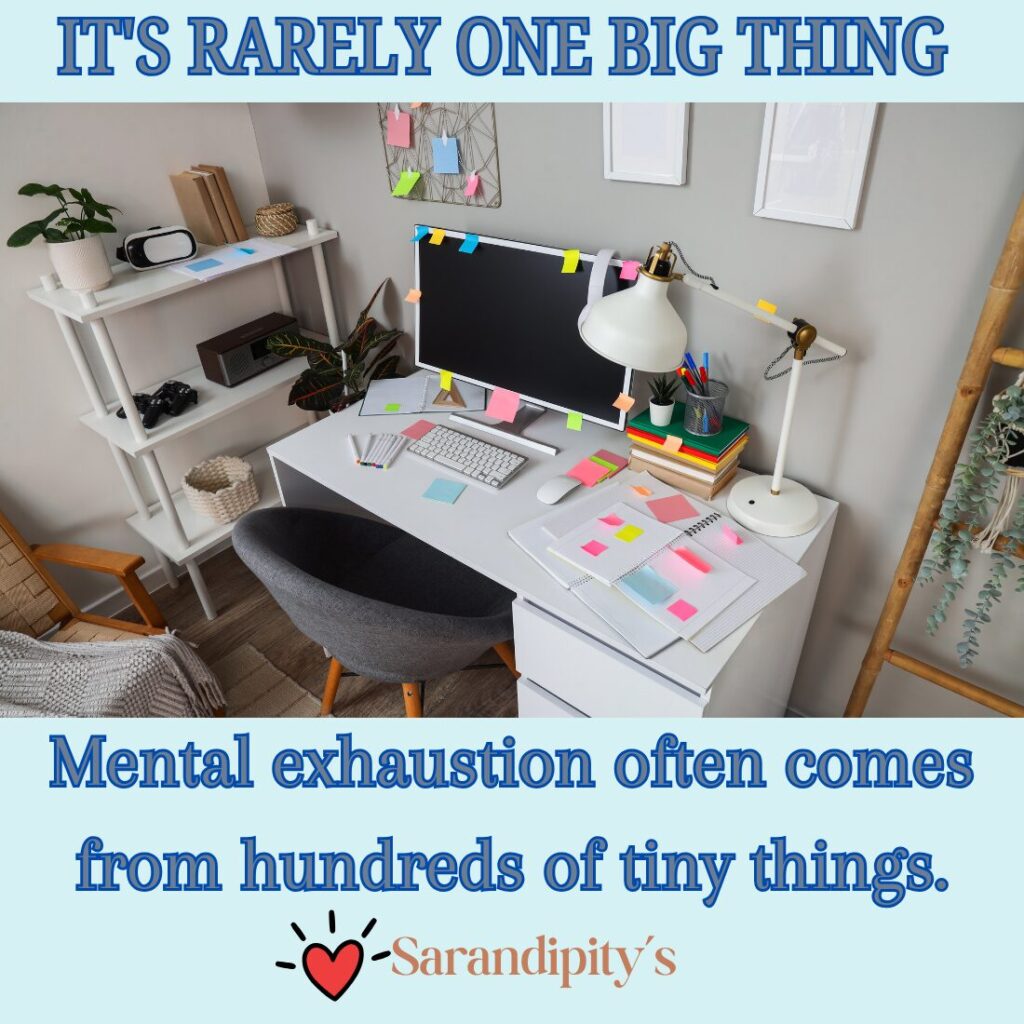
Unfinished Tasks Take Up More Space Than People Realize
One of the sneakiest sources of mental exhaustion is:
unfinished tasks.
Not necessarily difficult tasks.
Just:
unfinished ones.
Things like:
- returning a call
- scheduling an appointment
- replacing batteries
- answering an email
- making a decision
- ordering something you forgot
These tasks quietly sit in the background of your brain.

Your Brain Keeps Tracking Them
Even when you’re not actively thinking about them.
Your brain still remembers:
“Don’t forget that thing.”
Multiply that by:
20
30
40 tiny unfinished tasks
and suddenly your brain feels:
crowded.
Constant Decisions Quietly Wear People Down
Modern adulthood requires:
an unbelievable number of decisions.
What to cook.
What to buy.
What to prioritize.
What to answer first.
What to postpone.
Most people don’t notice how exhausting this becomes.
Tiny Decisions Add Up
Every decision requires:
attention,
processing,
and energy.
Which means:
even ordinary days can become mentally draining before anything particularly difficult happens.
Notifications Keep Interrupting Recovery
A lot of adults never fully recover mentally because:
they are constantly interrupted.
Texts.
Emails.
Reminders.
Alerts.
Group chats.
The brain rarely gets uninterrupted space anymore.
Recovery Requires Gaps
People often think:
rest means sitting down.
But real recovery often requires:
periods without new input.
And modern life makes that surprisingly difficult.
Visual Clutter Creates Mental Clutter
This one surprises people.
Because clutter is often treated as:
a purely organizational issue.
But visual clutter requires:
mental processing too.
Every pile,
unfinished project,
or overflowing counter
becomes another thing the brain quietly notices.
Your Brain Is Still Scanning
Even when you’re not consciously focusing on it.
Which is why cluttered environments often feel:
more exhausting than people expect.
Being The Household Memory System Is Exhausting
Many adults carry invisible tracking responsibilities.
Remembering:
- groceries
- appointments
- school forms
- birthdays
- household supplies
- maintenance tasks
The work is often:
mental.
Not physical.

Invisible Labor Is Still Labor
And because nobody sees it,
many people underestimate how much energy it requires.
Especially parents.
Especially moms.
Especially people managing multiple lives simultaneously.
Tiny Interruptions Destroy Focus
Modern adults rarely complete tasks without interruptions.
Phone notifications.
Questions.
Emails.
Noise.
Multitasking.
And every interruption forces the brain to:
reorient itself.
Context Switching Is Exhausting
The brain spends energy every time it shifts focus.
Which means:
constant interruptions quietly increase mental fatigue throughout the day.
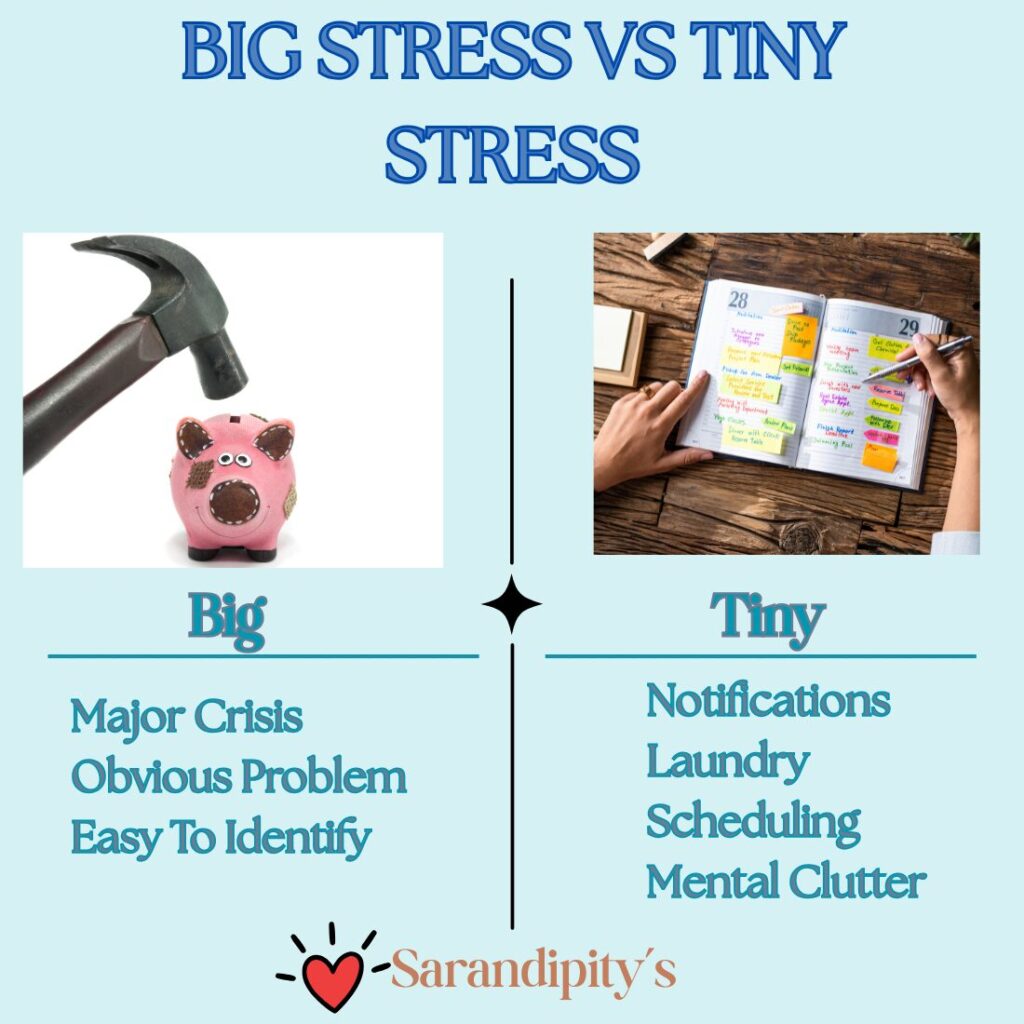
Decision Fatigue Shows Up In Strange Ways
Eventually mental energy gets low enough that:
simple decisions start feeling impossible.
Questions like:
“What do you want for dinner?”
suddenly feel:
emotionally aggressive. 😭
It Isn’t Laziness
It’s often:
decision fatigue.
A brain that has already made too many choices.
Worry Consumes More Energy Than People Realize
Mental energy is not only spent on:
doing things.
It’s also spent on:
anticipating things.
Many adults quietly carry:
- financial worries
- health worries
- family concerns
- future planning
- background stress
all day long.
The Brain Doesn’t Fully Relax
Even when nothing is actively wrong.
And over time,
that constant mental vigilance becomes exhausting.
Most Adults Need Fewer Inputs, Not More Productivity
This part matters.
Because many adults assume:
the solution is better productivity.
More apps.
More systems.
More optimization.
But sometimes the real solution is:
less input.
Less noise.
Less interruption.
Less mental clutter.
Less pressure.
Recovery Matters Too
Brains need:
space,
quiet,
and recovery
just as much as they need organization.
You’re Probably Carrying More Than You Realize
Honestly?
Many adults are carrying:
far more mental weight than they give themselves credit for.
Not because life is falling apart.
But because modern adulthood requires:
constant tracking,
constant remembering,
constant processing,
and constant decision-making.
That adds up.

Final Thoughts
Mental exhaustion is rarely caused by:
one giant thing.
More often,
it’s caused by:
hundreds of tiny things quietly pulling at your attention every day.
Unfinished tasks.
Notifications.
Decisions.
Invisible labor.
Interruptions.
Mental tabs.
None seem overwhelming alone.
Together?
They create the exhausted feeling so many adults carry constantly.
So if you’ve been feeling mentally drained lately,
please remember:
You may not need to work harder.
You may simply be carrying more than your brain was ever meant to hold all at once.