Modern adulthood can feel:
surprisingly relentless.
Notifications.
Responsibilities.
Schedules.
Mental tabs.
Laundry.
Emails.
Noise.
Decision fatigue.
Tiny recurring tasks forever. 😭
And honestly?
A lot of adults spend so much time:
trying to function,
survive,
and keep everything together
that they forget:
small comfort matters too.
Not in a:
“completely escape your responsibilities” way.
But in a:
“your nervous system deserves support” way.
Because tiny comforting habits often help adulthood feel:
more manageable,
more grounded,
and slightly less emotionally aggressive.
And honestly?
Small comforts can make a much bigger difference than people realize.
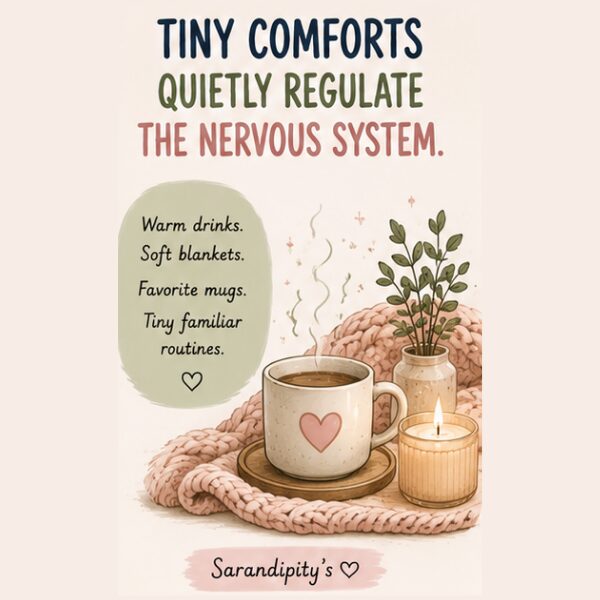
Tiny Comforts Quietly Regulate The Nervous System
One of the biggest adulthood misconceptions is that:
comfort must be:
- expensive
- dramatic
- luxurious
- highly aesthetic
- perfectly curated
But honestly?
Some of the most powerful comfort systems are:
tiny.
Things like:
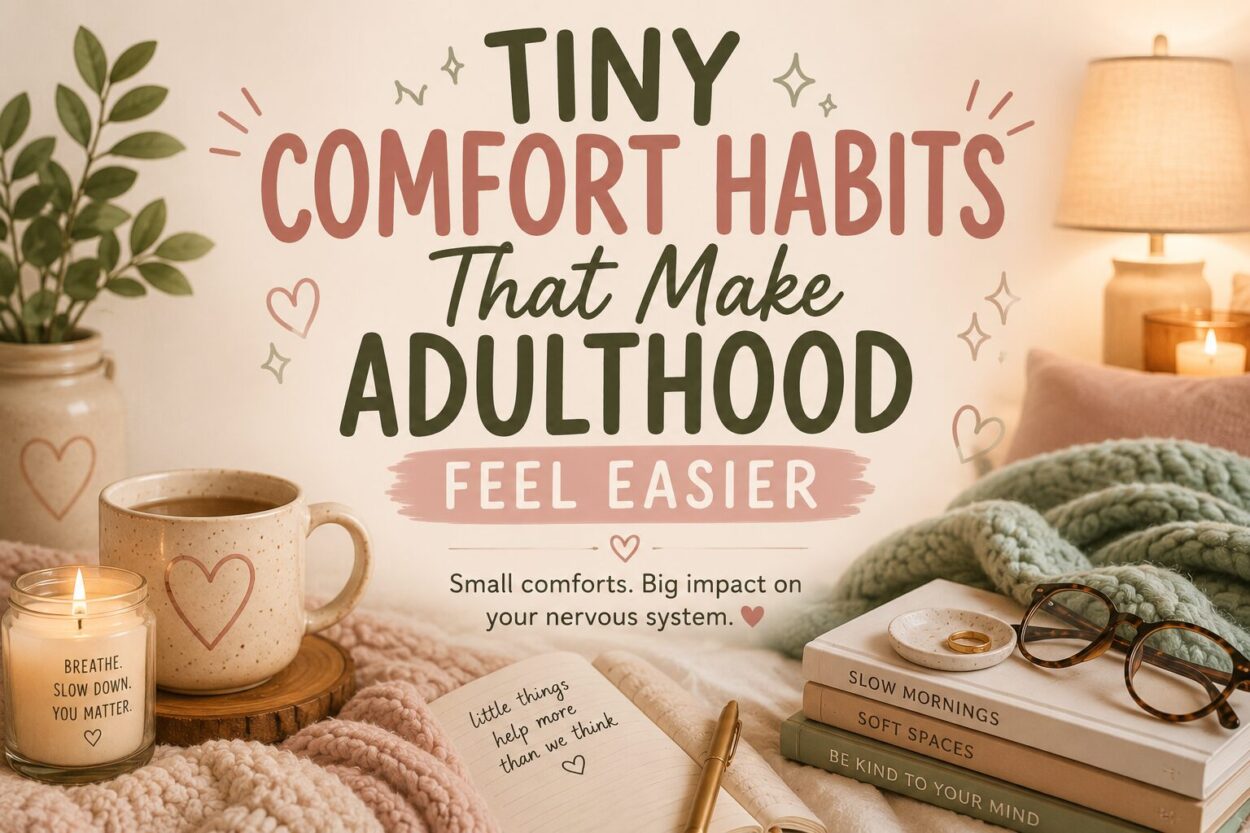
- warm drinks
- soft blankets
- comfort shows
- clean pajamas
- quiet lighting
- favorite mugs
- familiar routines
- calming scents
- tiny rituals
These small things create:
feelings of:
safety,
predictability,
and emotional grounding.
And during stressful seasons?
That matters deeply.
Emotional Support Drinks Are Real 😭
Honestly?
Most adults have:
an emotional support beverage.
Coffee.
Tea.
Diet Coke.
Iced coffee.
Sparkling water.
A specific emotional-support tumbler 😭
And while it sounds funny…
small rituals genuinely help people:
pause,
reset,
and emotionally transition through stressful days.
Tiny Rituals Create Stability
That morning coffee routine?
It’s often not really about:
the coffee.
It’s about:
- familiarity
- predictability
- comfort
- transition time
- emotional regulation
Tiny routines help adults feel:
slightly more anchored inside chaotic lives.
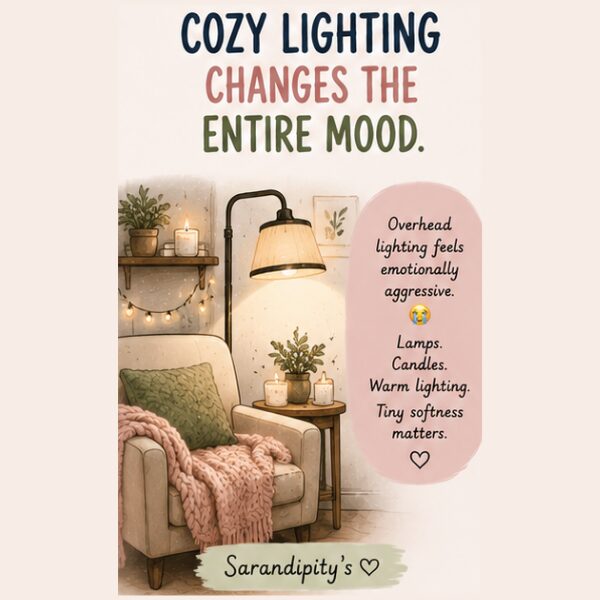
Cozy Lighting Changes The Entire Mood
This one is deeply underrated.
Because overhead lighting sometimes feels:
emotionally hostile. 😭
Meanwhile:
- lamps
- candles
- warm lighting
- string lights
- softer spaces
can genuinely make environments feel:
calmer,
safer,
and less overstimulating.
Environment Affects Stress More Than People Realize
Adults often underestimate:
how much sensory environments impact emotional energy.
Noise.
Clutter.
Brightness.
Visual chaos.
Harsh lighting.
Constant stimulation.
All of it affects:
the nervous system.
Which is why tiny environmental comforts often help people:
feel more emotionally regulated.
Comfort Shows Are Emotional Recovery Systems
A lot of adults rewatch:
the same shows repeatedly.
And honestly?
There’s a reason.
Familiar shows create:
- predictability
- emotional safety
- reduced mental effort
- comfort through familiarity
Especially during:
burnout,
stress,
overwhelm,
or emotional exhaustion.
Your Brain Sometimes Needs Familiarity
New information requires:
more processing energy.
But familiar shows allow the brain to:
rest slightly.
Which is why adults often emotionally attach to:
comfort movies,
background shows,
or familiar YouTube videos during difficult seasons.
That’s normal.
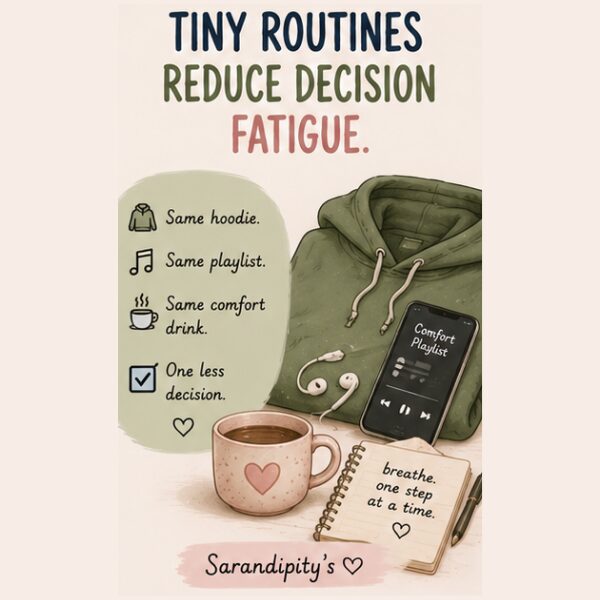
Tiny Routines Reduce Decision Fatigue
Modern adults make:
thousands of tiny decisions constantly.
Which means:
small automatic comforts can actually reduce:
mental exhaustion.
Examples:
- same breakfast
- favorite hoodie
- nighttime tea
- skincare routines
- specific playlists
- comfort meals
- familiar grocery items
- repeating simple systems
Predictability Feels Safe To Overloaded Brains
Especially during stressful periods.
Tiny predictable habits create:
small moments where the brain does not need to:
analyze,
optimize,
or emotionally buffer.
And honestly?
That relief matters.
Soft Spaces Matter More Than People Think
This sounds dramatic but:
adults genuinely need spaces that feel:
emotionally soft.
Not:
perfect.
Not:
Pinterest flawless.
Just:
comforting.
A blanket corner.
A reading chair.
A cozy bed.
A clean hoodie.
A favorite candle.
A peaceful morning routine.
A quiet couch moment after difficult days.
These things help people:
recover emotionally from constant stimulation.
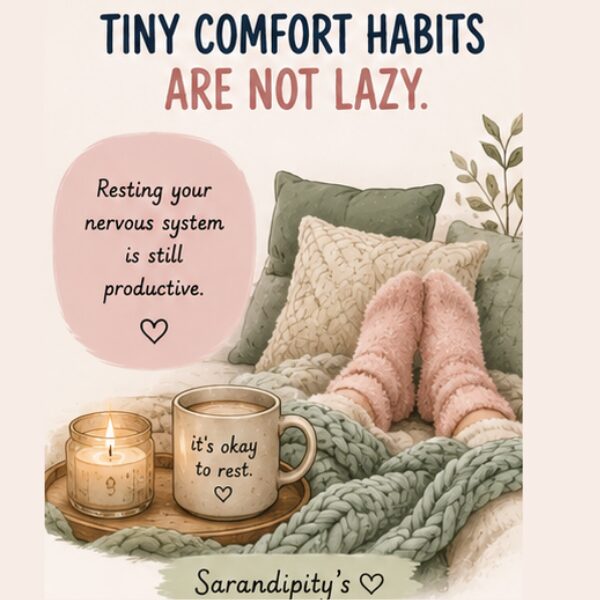
Tiny Comfort Habits Are Not “Lazy”
This part matters deeply.
Because modern culture often pushes:
constant productivity.
Meanwhile many adults are:
mentally overloaded,
emotionally exhausted,
and quietly running on low battery.
Small comforting systems are not:
weakness.
They are often:
maintenance.
Adults Need Emotional Recovery Too
People are not machines.
And adulthood requires:
constant emotional output.
So tiny comforting habits:
- rest the nervous system
- reduce overwhelm
- create emotional grounding
- improve emotional resilience
- help people recover mentally
That matters.
Most Adults Secretly Build Tiny Survival Systems
Honestly?
A surprising number of adults quietly rely on:
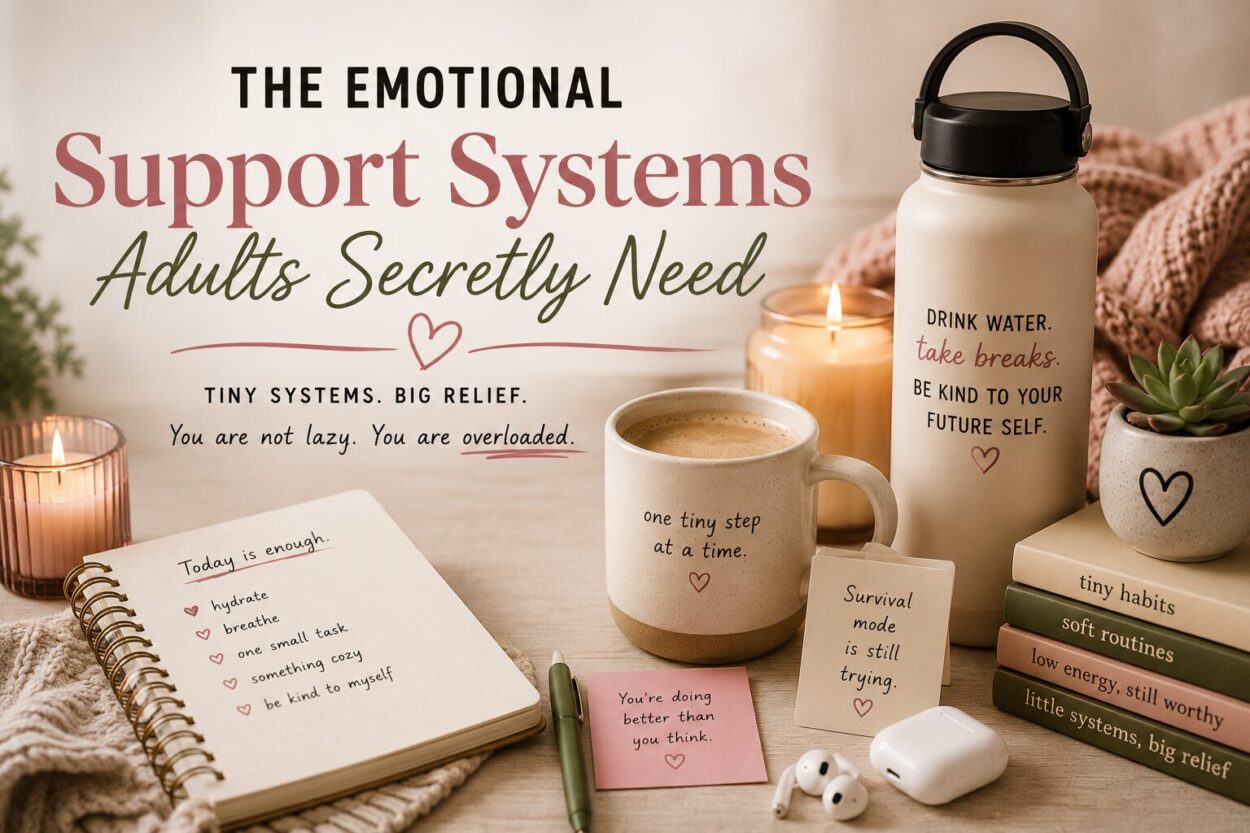
- emotional support water bottles
- comfort snacks
- same playlists
- safe foods
- cozy clothes
- routines
- favorite candles
- tiny habits
- comfort beverages
- familiar environments
just to make modern life feel:
slightly softer.
And honestly?
That makes complete sense.
Because adulthood can feel:
very loud,
very fast,
and very overstimulating sometimes.
Tiny comforts help people:
keep going.
Comfort Does Not Need To Be Earned
This is important.
A lot of adults unconsciously believe:
they must:
- finish everything first
- be productive enough
- deserve rest
- “earn” comfort somehow
But comfort is not:
a reward for exhaustion.
People deserve:
small moments of softness,
care,
and emotional relief
even during unfinished seasons.
Final Thoughts
Modern adulthood often feels:
overstimulating,
mentally loud,
and emotionally exhausting.
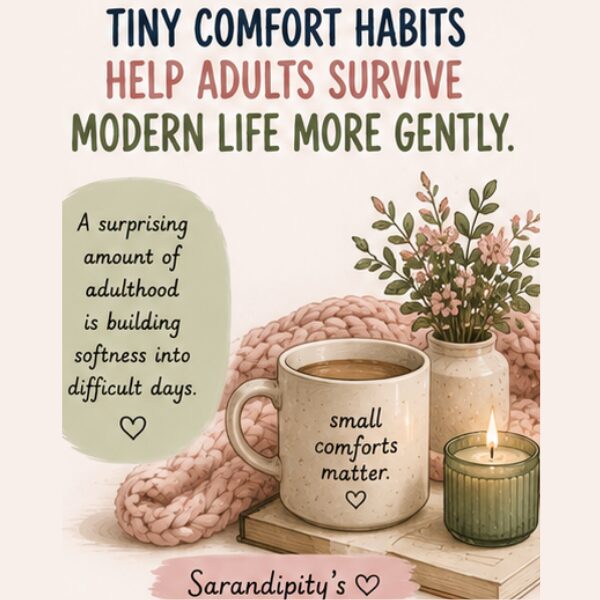
Which is exactly why:
tiny comfort habits matter so much.
Not because they magically solve stress.
But because they help adults:
feel safer,
calmer,
more grounded,
and slightly less overwhelmed
inside demanding lives.
So if you:
- rewatch comfort shows
- love cozy lighting
- have an emotional support drink
- wear the same comfort hoodie repeatedly
- rely on tiny familiar routines
- emotionally attach to specific mugs 😭
you are definitely not alone.
A surprising amount of adulthood is simply:
building tiny systems that help your nervous system survive modern life a little more gently.