Unbelonging blog tour is through The Coffee Pot Book Club. Share, comment, subscribe, check out the excerpt.
Book Title and Author Name:
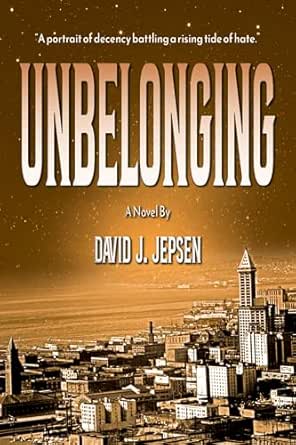
Unbelonging
David J. Jepsen
Blurb:
Seattle, 1945. The war is ending-but for many, the hardest battles are just beginning.
In a city transformed by global conflict, four families struggle to find their place amid rising tensions, buried prejudice, and shifting identities. Victory overseas has brought hope, but at home, fear, suspicion, and inequality continue to shape everyday life.
A female defense worker, newly awakened to injustice, risks everything as she steps into the dangerous world of labor activism-threatening not only her future, but the safety of those she loves. A decorated Black war hero returns home expecting honor and opportunity, only to face a different kind of battlefield, where racism and exclusion deny him the freedoms he fought to defend. A Japanese American, released from internment, discovers that the end of war does not mean the end of hatred, and that rebuilding a life in a community that no longer trusts him may be the greatest challenge of all. A hopeful British war bride arrives chasing the promise of a new beginning, only to learn that the American dream is complicated, fragile, and not equally shared.
As labor strikes ripple through the city, racial tensions simmer, and the first shadows of Cold War hysteria begin to take hold, Seattle reveals itself as a place both beautiful and deeply divided. Old prejudices harden even as new voices rise, demanding change.
This powerful, emotionally charged novel strips away the myth of an open and enlightened city, exposing the human cost of exclusion and the quiet courage of those who refuse to accept it.
A sweeping story of resilience, identity, and the search for belonging-welcome to the City on the Sound, where no one is quite sure where they belong.
Praise:
“Just a great read and anyone who picks it up is guaranteed to learn a thing or two: from Guadalcanal to local labor disputes.”
~ Mr. K, Amazon 5* review
Buy Link:
Universal Buy Link: https://books2read.com/u/38o1n7
Excerpt 3:
To help clear the way, Frank Sasaki obtained permission to return to Seattle in April to check on the status of their restaurant and their home on Fourteenth and Yesler. He was relieved to learn about a drop-off in violence against Japanese. But with war still raging in Asia at that time, anti-Japanese sentiment was ever present. At the invitation of his pastor at the Japanese Congregational Church, he’d attended a public hearing at Seattle City Hall on resettlement. Seattle Mayor William Devin and Washington Governor Mon C. Wallgren presided. They sat behind a table on the stage flanked by three members of the city council.
Organizations opposed to allowing Japanese to return before war’s end dominated the discussion early. Frank sat quietly in the back. Fallacious accusations and groundless speculation alarmed him. Particularly offensive was the Remember Pearl Harbor League. They represented the interests of white farmers in the Kent Valley who took possession of fields once leased to Japanese. The speaker was the League’s president, Ed Phelan, who appeared to be about fifty. He stood and looked at the crowd of two hundred.
“From my experience, you can’t trust these Japs,” he declared. As he spoke, he seemed to zero in on Frank, one of the few Japanese present. “During the Depression, they worked for a buck fifty a day in the fields and turned around and gave twenty-five cents of that to some Jap who is now a captain in the Japanese army. Those two-bit pieces are now punching holes in our boys.”
A member of the equally despicable Japanese Exclusion League stood and called for an amendment to the U.S. Constitution to deport all Japanese who were noncitizens. Another criticized the court ruling that only “loyal” Japanese were to be freed. “Sure, most Japanese are loyal, but one out of a hundred may not be. You can’t tell if a Jap is loyal just by looking at him. The only way to be sure is keep them all out. Let them go back to Japan or move off the coast.”
“If they’re not American citizens, throw them out,” one woman demanded. “The only people who will benefit are the social reformers with their impossible aims.”
The barrage of hate speech droned on.
“The Japanese have been indoctrinated with sadistic philosophy of emperor worship.”
“For every Japanese our soldiers destroy, you shield and protect the fanatically dangerous
here at home.”
“Humanitarian gestures in behalf of the Japs is parallel to the historical Trojan horse.”
“My grandfather fought to take away this land from the Indians, and now the Japs are trying to take it away from us.”
Suddenly a man seated in the front stood and raised his right hand. “Mr. Mayor and Governor how long do we have to listen to this nonsense?” The speaker was Arthur Barnett, an attorney with the Seattle Council of Churches. The Council and multiple other civic organizations vigorously opposed internment. Since then the council remained a constant source of support for the Japanese. They traveled to Minidoka repeatedly to deliver supplies and offer legal services. He looked directly at Mayor Devin and Governor Wallgren, both of whom showed only lukewarm support for resettlement.
“I ask you, sirs, what other group on the home front has suffered more than the Japanese?” He looked around the suddenly quiet hall. “They’ve been deprived of their civil and constitutional rights. They’ve been socially and economically ostracized, and treated with unwarranted suspicion. They’ve lost their homes and businesses. The least we can do is help them to get back to normal.”
The crowd appeared split on this notion. Some nodded in agreement, others shook their heads, shifted in their seats.
“You bring them back, we won’t be responsible for how many are hanging from lamp posts,” yelled a man from the back.
“Where is your decency sir?” Barnett pleaded, looking back at the man. He turned to face the men on the stage. “Have we not learned anything from the atrocities in Europe? he asked. “The thing most lacking in the early days of Hitlerism was civic righteousness.” He stretched the word into three syllables, right-eous-ness. “The atrocities committed against the Jews were tolerated for years by groups that feared to speak out until it was too late. Where is our civic righteousness? We must speak out now on behalf of our fellow citizens and Christians before it’s too late. Surely, Mr. Mayor,” Barnett concluded, “Seattle will respond as a truly American city. They will grant the returning American-Japanese citizens all the rights to which they are legally entitled.”
Author Bio:
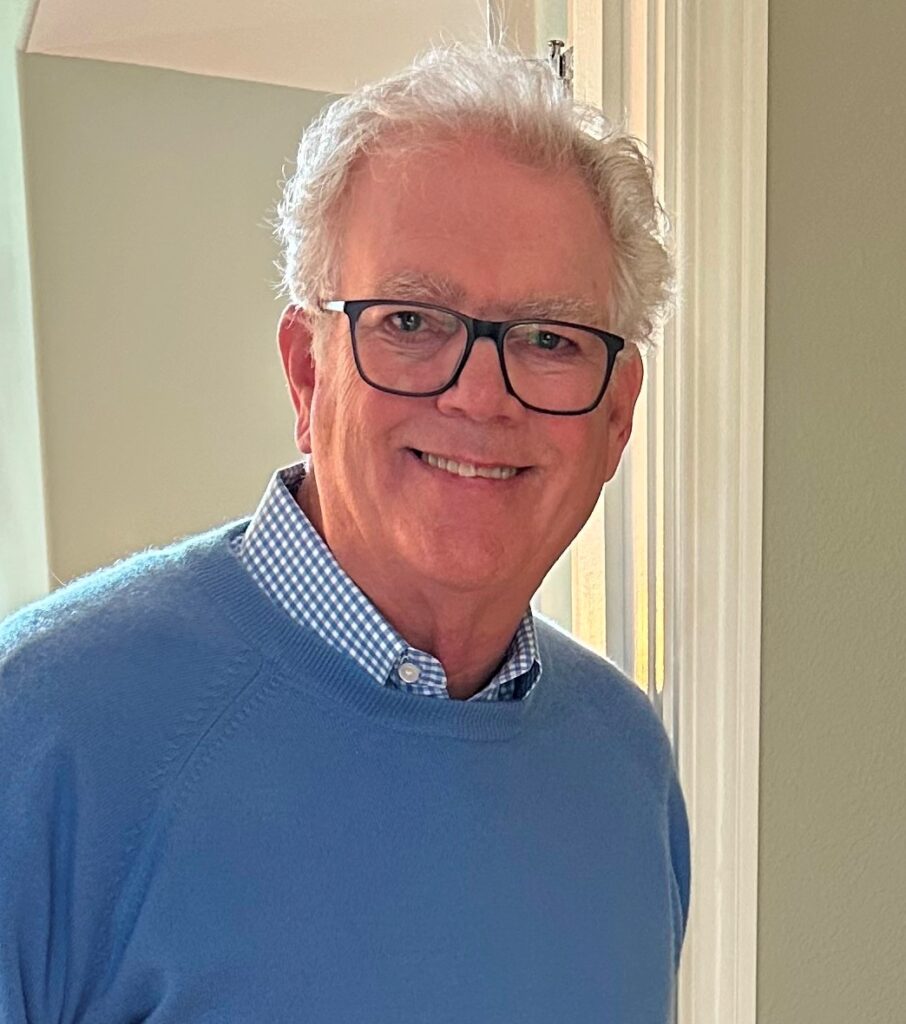
David J. Jepsen is a historian, writer and educator teaching Pacific Northwest and U.S. history at Tacoma Community College. His novel about racial and labor conflicts in Seattle following WW II, titled Unbelonging, was released in April 2026.
He was lead author of Contested Boundaries: A New Pacific Northwest History (John Wiley and Sons, 2017), and he wrote and directed the award winning documentary Labor Wars of the Northwest, nominated in 2019 for Best Feature Film Made in Washington by the Gig Harbor Film Festival.
David writes a weekly post for the Washington State Historical Society titled “This Day in Washington.” He holds a master’s degree in history and a bachelor’s in communications from the University of Washington.
He lives with his wife, Jackie, in Gig Harbor, WA.
Author Links:
Website: https://davidjjepsen.com/
Facebook account: https://www.facebook.com/david.j.jepsen.2025/
Facebook author page: https://www.facebook.com/profile.php?id=61569571076494
Instagram: https://www.instagram.com/djjepsen
Historium Press author page: https://www.historiumpress.com/david-jepsen
LinkedIn: https://www.linkedin.com/in/david-jepsen-386b5b14/ Goodreads: https://www.goodreads.com/author/show/15496682.David_J_Jepsen