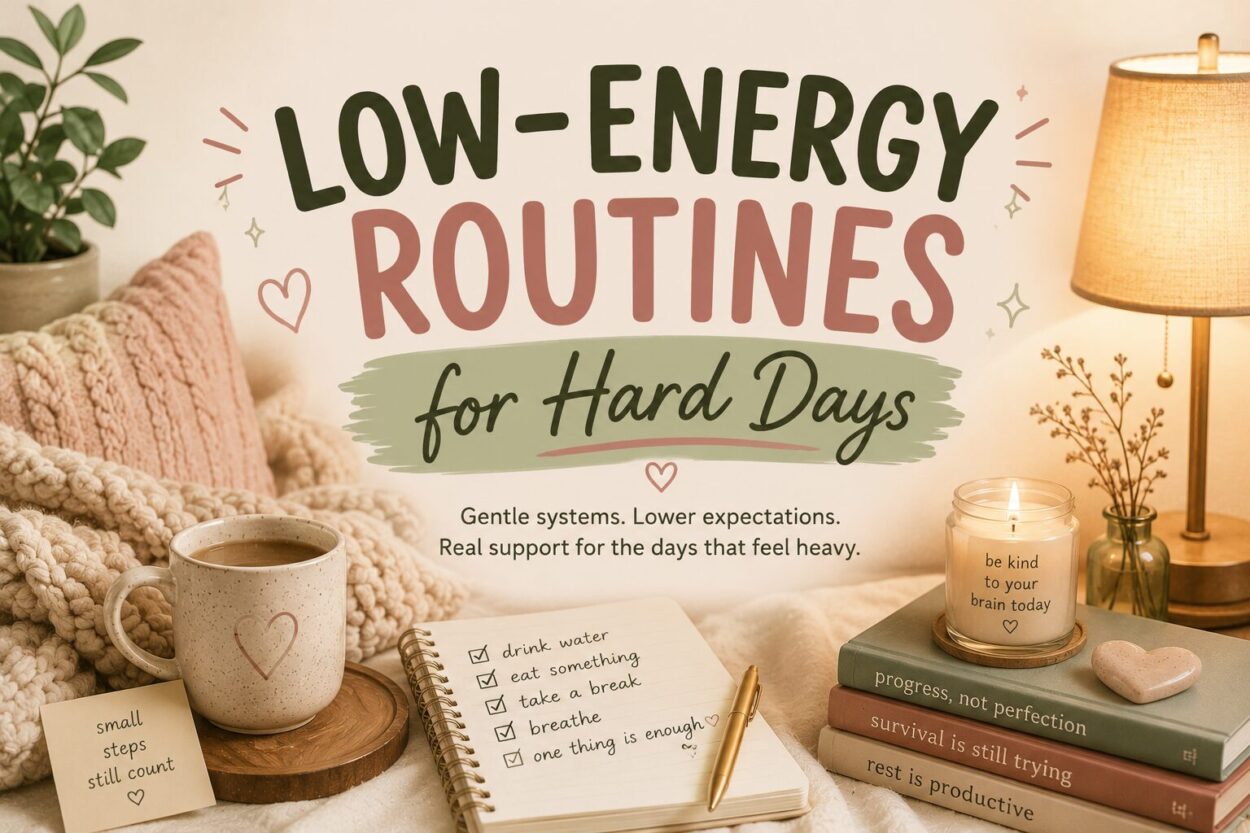
One of the hardest parts of adulthood is realizing:
life does not pause when your energy disappears.
You still have:
- dishes
- laundry
- responsibilities
- messages
- appointments
- emails
- obligations
- tiny maintenance tasks forever 😭
even during periods where your brain and body feel:
completely exhausted.
And honestly?
A lot of adults quietly believe:
if they cannot function at full capacity,
they are:
- failing
- lazy
- unmotivated
- bad at adulthood somehow
But that’s usually not true.
Most adults are simply:
trying to survive modern life while mentally overloaded.
Which is why:
low-energy routines matter so much.
Not:
perfect routines.
Not:
optimized productivity systems.
Just:
gentle systems that help difficult days feel:
slightly more manageable.
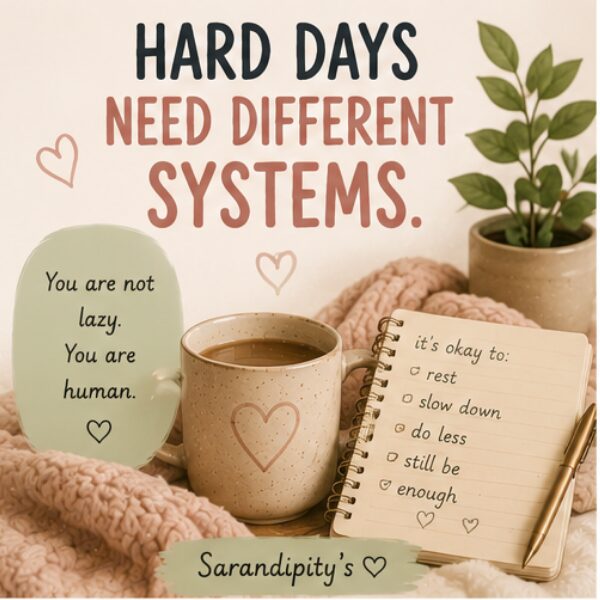
Hard Days Need Different Systems
One of adulthood’s biggest mistakes is assuming:
every day requires the same level of functioning.
But humans are not:
machines.
Some days people feel:
focused,
motivated,
and energized.
Other days?
Even answering one email feels emotionally aggressive. 😭
Low-Energy Days Are Still Real Life
This matters deeply.
Because adults often judge themselves harshly for:
- struggling during burnout
- needing extra rest
- functioning more slowly
- having limited emotional capacity
without recognizing:
hard days are part of being human.
Which means:
people need systems that work:
even during low-energy seasons.
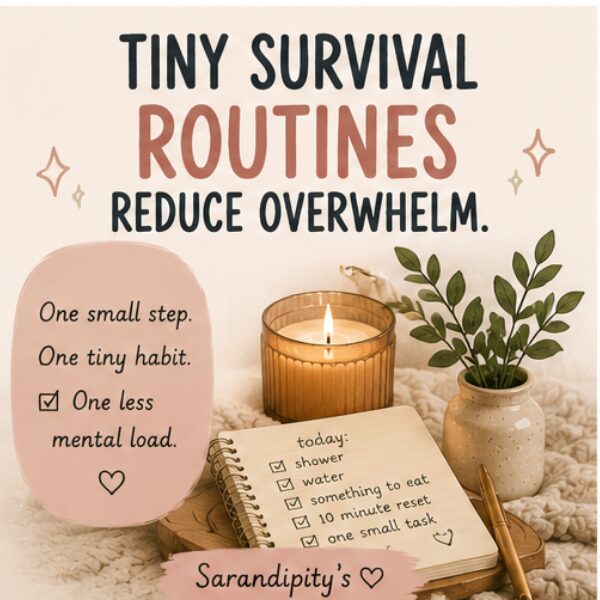
Tiny Survival Routines Reduce Overwhelm
During difficult days,
tiny routines matter more than:
ambitious plans.
Because overwhelmed brains often struggle with:
- decision fatigue
- mental buffering
- task initiation
- emotional exhaustion
- overstimulation
Small predictable systems reduce:
mental load.
Tiny Systems Create Stability
Examples:
- putting dishes directly into the dishwasher
- setting out clothes early
- using reminders
- simplified meals
- repeating routines
- keeping comfort foods available
- basic reset habits
- tiny “minimum effort” cleaning systems
These systems are not:
lazy.
They are:
supportive.
Functionality Matters More Than Perfection
This is one of the most important adulthood lessons:
functional systems are more valuable than perfect systems.
A lot of adults create routines based on:
idealized fantasy productivity.
Meanwhile, realistic routines should support:
actual human energy levels.
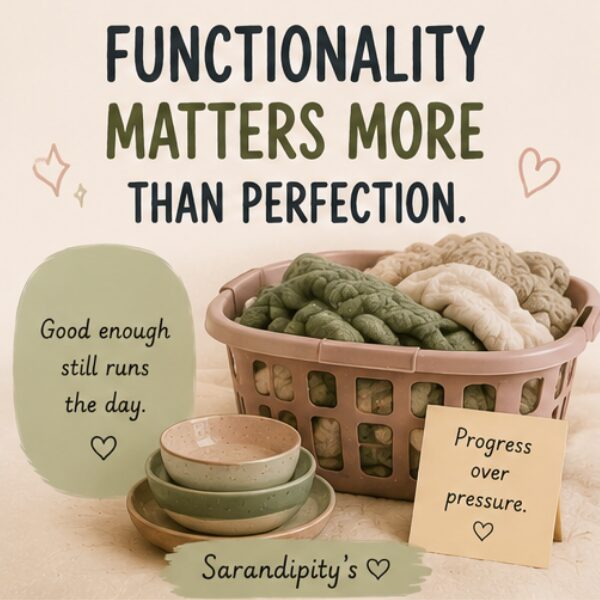
“Good Enough” Systems Often Work Better
Examples:
- paper plates during burnout
- laundry baskets instead of perfect folding
- grocery shortcuts
- frozen meals
- simple routines
- cleaning in tiny sections
- rest before exhaustion gets worse
Perfect systems often collapse during difficult seasons.
Flexible systems survive.
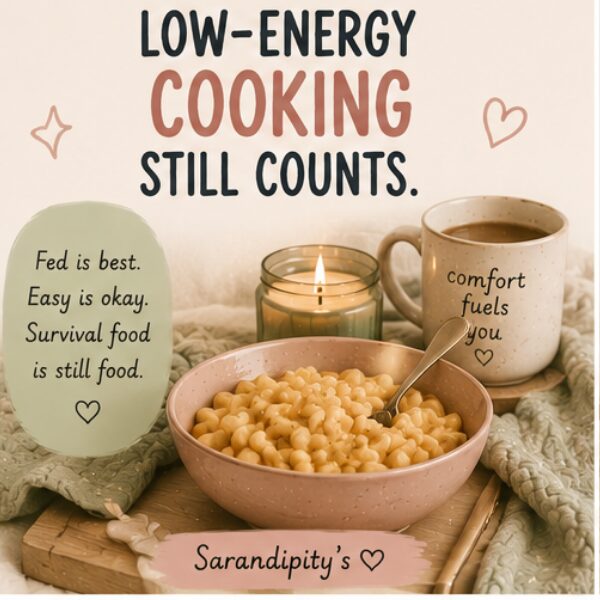
Low-Energy Cooking Still Counts
This part matters.
Because adults often attach guilt to:
“easy” food.
But honestly?
Feeding yourself during difficult periods IS productive.
Even if the meal is:
- frozen
- repetitive
- simple
- snacks assembled emotionally 😭
Survival Food Is Still Food
A lot of adults quietly survive hard periods through:
- comfort meals
- low-effort meals
- safe foods
- repetitive foods
- convenience foods
- emotional support snacks
And honestly?
That makes complete sense during overwhelming seasons.
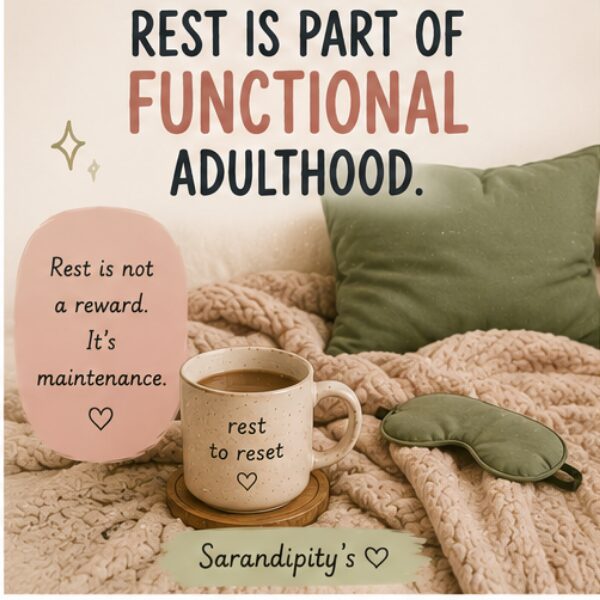
Rest Is Part Of Functional Adulthood
Modern culture often treats rest like:
a reward.
Meanwhile rest is actually:
maintenance.
Especially for overloaded nervous systems.
Exhausted Brains Need Recovery Time
Adults often push themselves past:
healthy emotional limits because they feel:
guilty slowing down.
But constant exhaustion eventually affects:
- motivation
- focus
- emotional regulation
- memory
- energy
- stress tolerance
Rest helps people:
continue functioning long-term.
That matters.
Tiny Reset Habits Help More Than Extreme Productivity
A lot of adults assume they need:
massive life overhauls.
But honestly?
Tiny resets usually help more during hard periods.
Examples:
- showering
- opening blinds
- drinking water
- changing clothes
- clearing one small area
- sitting outside briefly
- lowering sensory overload
- using softer lighting
- taking breaks without guilt
Tiny Improvements Still Matter
Adults often dismiss:
small progress.
But during difficult periods:
small improvements create:
real emotional momentum.
Survival Mode Is Still Trying
This part matters deeply.
Because many adults quietly shame themselves for:
- struggling
- slowing down
- restarting routines repeatedly
- needing help
- having limited capacity
But surviving hard periods still requires:
effort.
You Are Not Lazy. You Are Overloaded.
Modern adulthood requires:
constant mental processing.
And many adults are carrying:
burnout,
stress,
invisible labor,
decision fatigue,
emotional exhaustion,
and nervous system overload simultaneously.
That is:
a LOT for one person to manage continuously.
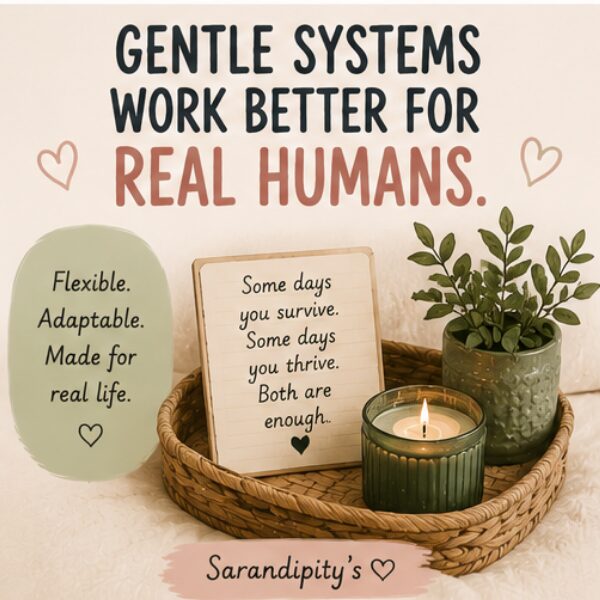
Gentle Systems Work Better For Real Humans
A lot of productivity advice assumes:
people are functioning at:
100% capacity constantly.
Real life does not work that way.
People get:
- sick
- overwhelmed
- overstimulated
- emotionally exhausted
- mentally drained
- burned out
Which is why:
gentle flexible systems are often more sustainable than:
rigid perfection.
Sustainable Routines Adapt To Energy Levels
The best systems often allow:
- flexibility
- recovery
- lower-capacity days
- imperfect execution
- emotional realism
Because adults are humans.
Not productivity robots.
Most Adults Quietly Build Survival Systems
Honestly?
A surprising amount of adulthood is:
building tiny routines that help life stay:
functional enough
during overwhelming periods.
Things like:
- comfort routines
- reminder systems
- low-energy cleaning habits
- repetitive meals
- emotional support beverages
- tiny reset rituals
- low-stimulation spaces
These systems help adults:
keep going.
And honestly?
That’s something people deserve more credit for.
Final Thoughts
Modern adulthood is exhausting sometimes.
And during difficult seasons,
people do not need:
more shame,
more pressure,
or impossible perfection standards.
They need:
gentler systems.
Low-energy routines are not:
failure.
They are often:
survival systems for overloaded humans trying to function inside demanding lives.
So if your current routines look more like:
- doing the minimum
- simplifying everything
- surviving on comfort meals
- repeating tiny habits
- resting more
- lowering expectations temporarily
- trying to reduce overwhelm
please know this:
That still counts.
A surprising amount of adulthood is simply:
learning how to survive hard days more gently.