Most meal planning advice sounds great in theory.
Then real life happens.
The kids get busy.
Work gets hectic.
Someone forgets to thaw the chicken.
A surprise expense shows up.
And suddenly that beautifully organized meal plan lasts approximately three days. 😭
If you’ve ever started meal planning with the best intentions only to abandon it a week later, you’re definitely not alone.
The problem usually isn’t meal planning itself.
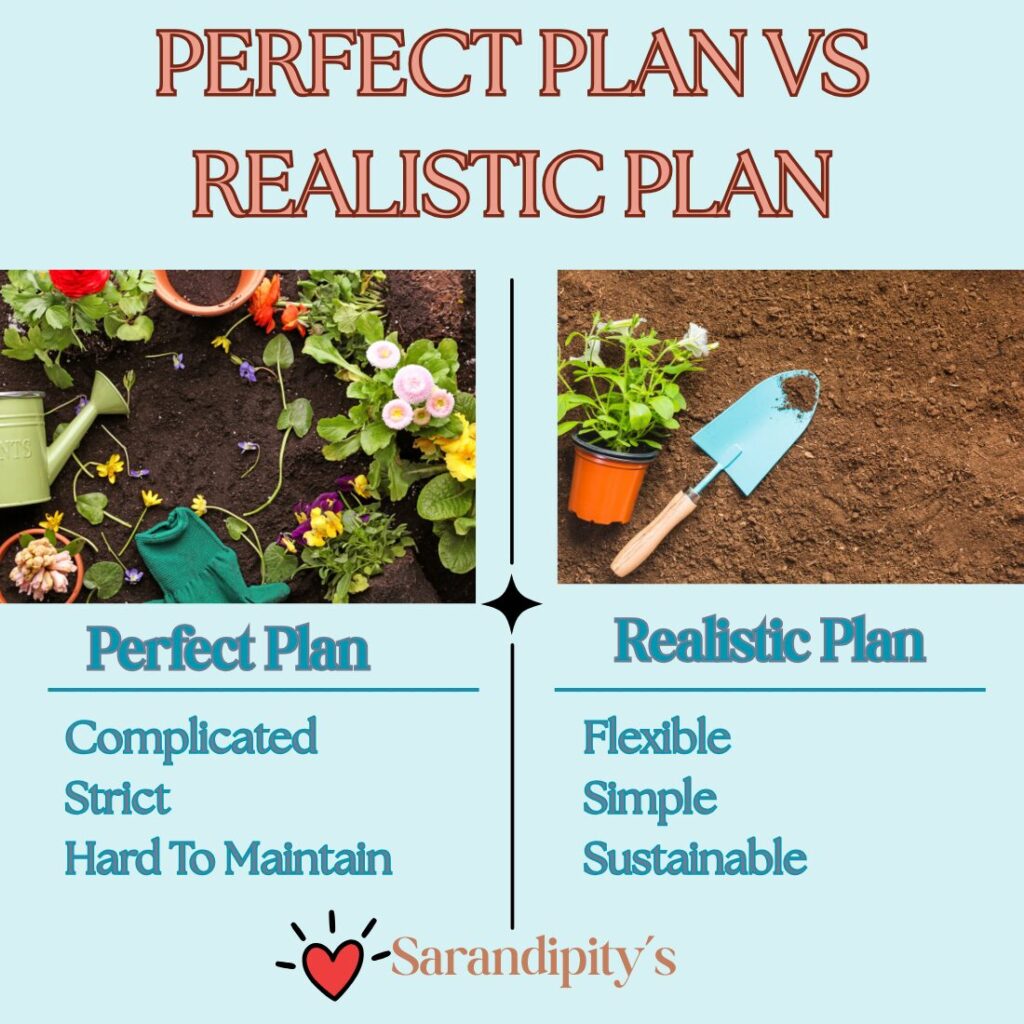
The problem is trying to create a system that works for a perfect life instead of a real one.
Start Smaller Than You Think
One of the biggest mistakes people make is trying to plan everything immediately.
Breakfast.
Lunch.
Dinner.
Snacks.
Color-coded spreadsheets.
Detailed prep schedules.
It’s overwhelming.
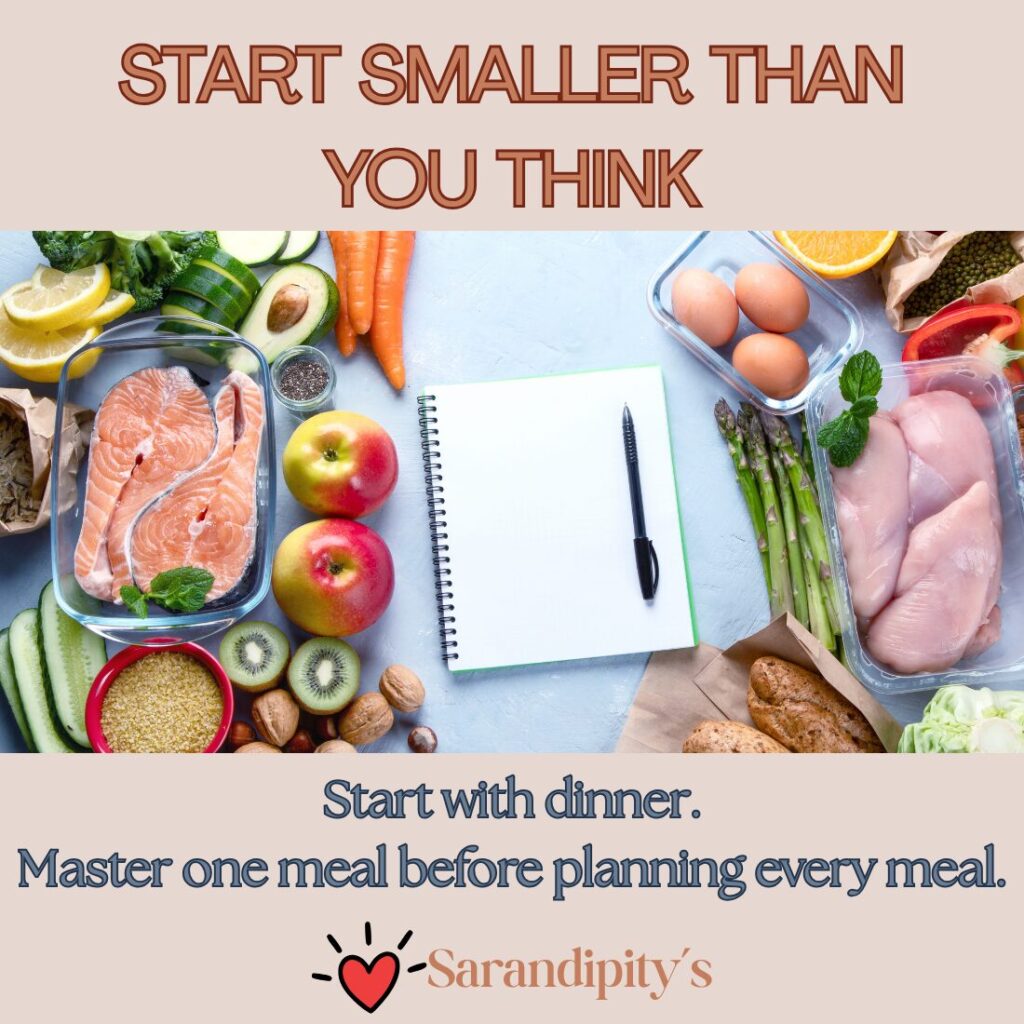
Instead, start with dinner.
Just dinner.
If dinner feels easier, you’ve already reduced a significant amount of daily stress.
Small wins create sustainable habits.
Build Around Meals Your Family Already Likes
A lot of meal plans fail because they’re built around aspirational meals.
Not realistic meals.
Your family does not suddenly become adventurous eaters because you downloaded a meal-planning template.
Start with meals that already work.
Meals everyone will eat.
Meals you already know how to cook.
Meals that fit your budget.
Consistency beats novelty every time.
Create A List Of Go-To Dinners
This is one of the simplest systems you can create.
Make a list of:
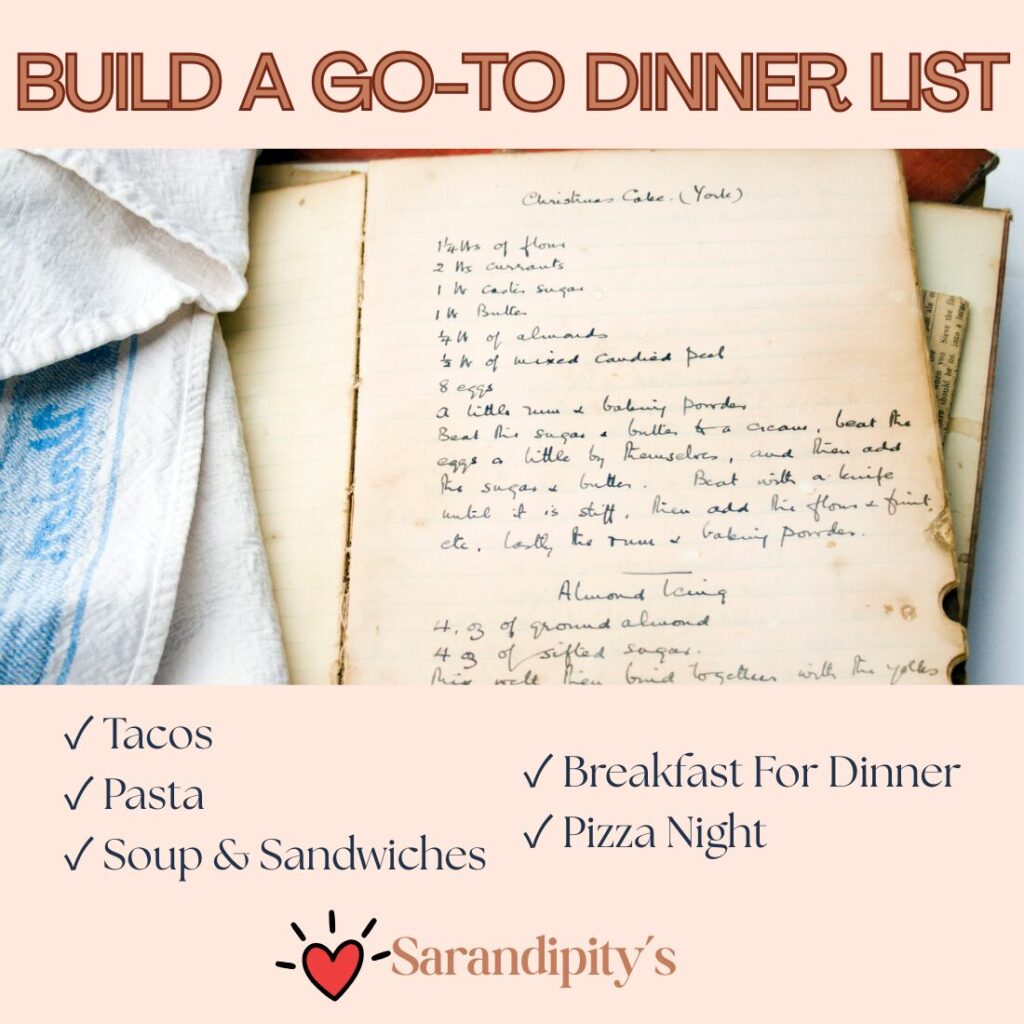
10–20 meals your family regularly enjoys.
Examples:
- tacos
- spaghetti
- breakfast for dinner
- grilled chicken
- soup and sandwiches
- pizza night
- baked potatoes
- stir fry
Now instead of asking:
“What should we eat?”
you simply choose from your existing list.
That eliminates a huge amount of decision fatigue.
Want someone else to create the meal plan?
Inside the Meal Management Membership, you’ll get done-for-you weekly meal plans, grocery lists, prep guides, pantry checklists, and seasonal meal rotations designed for real families and real schedules.
Join the Meal Management Membership
Theme Nights Reduce Mental Load
Many families accidentally make meal planning harder than it needs to be.
Theme nights create built-in structure.
Examples:
- Taco Tuesday
- Pasta Wednesday
- Slow Cooker Thursday
- Pizza Friday
- Soup Saturday
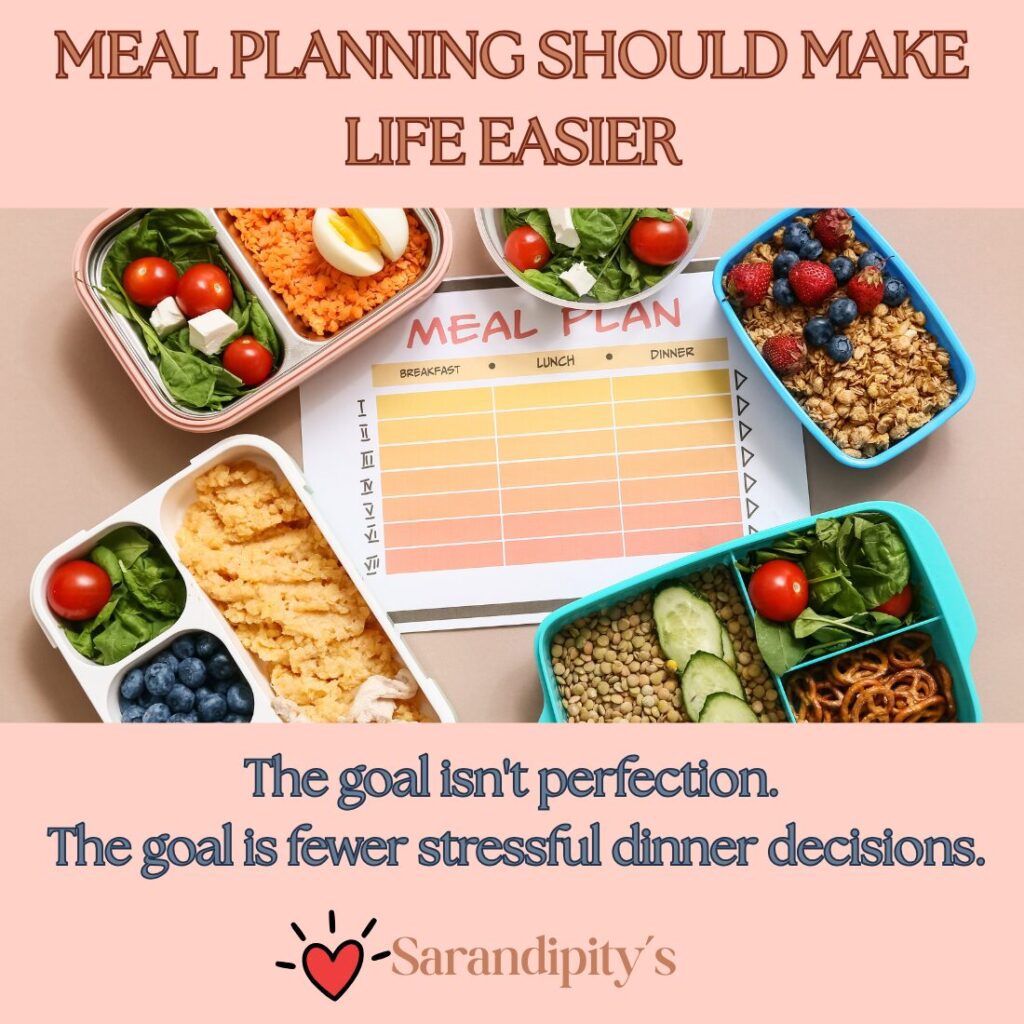
The goal isn’t perfection.
The goal is reducing the number of decisions you need to make.

Plan Around Your Actual Schedule
This is where many meal plans fail.
People plan meals based on motivation.
A complicated recipe might sound great on Sunday.
It won’t feel nearly as exciting after soccer practice, errands, work meetings, and a long day.
Save easy meals for busy nights.
Save larger meals for slower days.
Work with your schedule instead of fighting it.
Leave Breathing Room
This might be the most important tip.
Do not schedule every meal.
Leave flexibility.
Keep backup meals available.
Plan leftovers intentionally.
Create margin.
Because life doesn’t care about your meal plan any more than it cares about your planner.
And that’s okay.
The goal is adaptability.
Grocery Shopping Gets Easier Too
Once meal planning becomes a habit, grocery shopping becomes significantly simpler.
You’re buying ingredients with purpose.
You’re wasting less food.
You’re making fewer emergency trips to the store.
And you’re spending less time wandering grocery aisles wondering what everyone should eat this week.
Involve The Family When Possible
One reason meal planning becomes frustrating is because one person ends up carrying the entire responsibility.
Ask for input.
Let kids choose a meal occasionally.
Have family members suggest favorites.
Create shared ownership whenever possible.
You don’t need to carry every decision alone.
Want to turn mealtime into fun? Grab my Fork & Fun Prompt Card Deck (with the latest summer edition) to make mealtime planning as fun as pulling a card from a deck. Easily plan out a full course meal by randomly drawing five different cards. It’s fun for kids and parents alike!
Good Enough Is Better Than Perfect
The most successful meal-planning routines are not the most complicated.
They’re the most sustainable.
The routine that works 80% of the time is infinitely better than the perfect routine that only lasts one week.
Progress beats perfection.
Every single time.
A Routine Should Reduce Stress
If your meal-planning system creates more stress than it removes, simplify it.
Meal planning should make life easier.
Not become another overwhelming project.
The best system is the one you’ll actually use.

Final Thoughts
A meal-planning routine doesn’t need to be complicated to be effective.
It simply needs to reduce decisions, lower stress, and make everyday life feel a little more manageable.
Start small.
Keep it flexible.
Build around reality.
And remember:
The goal isn’t creating the perfect meal plan.
The goal is making dinner easier for your future self.
And honestly?
Future you deserves that kind of support.




This is a doable, clear and easy to follow plan. Weekly planning can feel overwhelming.