If you’ve ever created a meal plan that lasted exactly three days before falling apart, you’re not alone.

In fact, I don’t think most meal plans fail because people lack discipline.
I think most meal plans fail because they’re built for perfect weeks.
And perfect weeks don’t exist.
Life happens.
Schedules change.
Kids get invited somewhere.
Work runs late.
Appointments pop up.
People get sick.
Energy levels crash.
And suddenly that beautiful meal plan sitting on the refrigerator doesn’t match reality anymore.
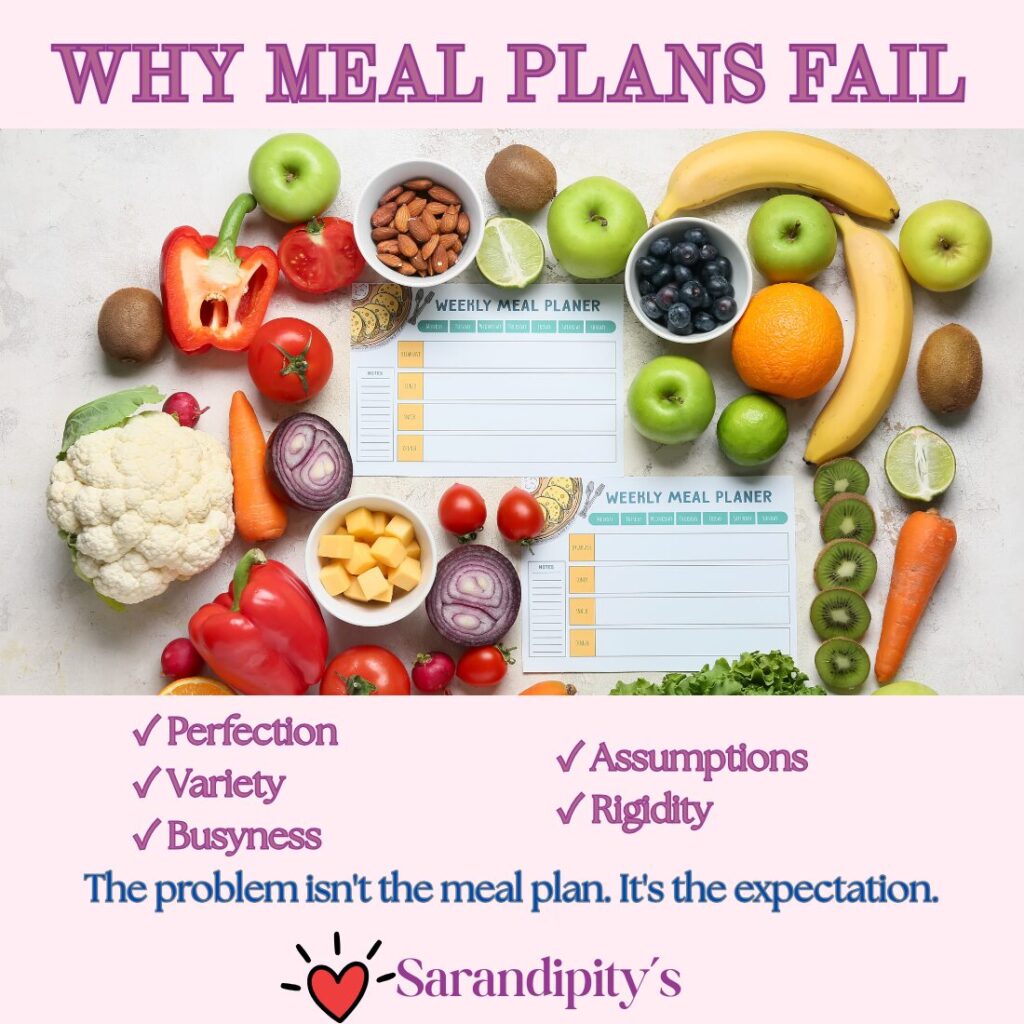
The problem isn’t the meal plan.
The problem is the expectation that life will cooperate.
Most Meal Plans Are Built For An Imaginary Family
When people sit down to create a meal plan, they often imagine the best version of their week.
The organized version.
The motivated version.
The version where everyone happily eats the planned meals and dinner happens exactly on schedule.
Unfortunately, real families rarely operate that way.
Real families are busy.
Real families get tired.
Real families forget things.
Real families occasionally decide frozen pizza sounds better than the meal they planned.
A successful meal plan has to work with real life, not an ideal version of it.
Reason #1: Planning Meals Nobody Actually Likes
This is probably the biggest mistake people make.
They create a meal plan full of meals they think they should eat.
Healthy meals.
Complicated recipes.
Pinterest-perfect dinners.
Then reality arrives.
Nobody wants to eat them.
Or nobody has the energy to make them.
Or half the family complains.
The best meal plan isn’t the most impressive meal plan.
It’s the one your family will actually follow.

Reason #2: Too Many New Recipes
Trying a new recipe can be fun.
Trying five new recipes in one week can be exhausting.
New recipes require:
- more planning
- more ingredients
- more decisions
- more attention
During busy seasons, familiar meals often win.
That’s not boring.
That’s sustainable.
Successful meal plans usually rely on a small rotation of trusted favorites.
Reason #3: Not Planning For Busy Days
One of the easiest ways to fail is planning every day as if it has the same amount of energy.
It doesn’t.
Some days are naturally busier than others.
If soccer practice ends at 6:30 PM, that probably isn’t the night for a complicated homemade casserole.
Busy days need simple meals.
Slow cooker meals.
Leftover nights.
Freezer meals.
Or something that can be assembled quickly.
The best meal plans account for reality.

Reason #4: Shopping Without Checking What You Already Have
This creates two problems.
First, food waste.
Second, refrigerators full of random ingredients that never become meals.
Many families buy groceries before checking:
- pantry inventory
- freezer inventory
- refrigerator inventory
As a result, food gets forgotten.
Money gets wasted.
And dinner still feels difficult.
Reason #5: Making The Plan Too Rigid
This might be the biggest lesson I’ve learned.
A meal plan should guide your week.
It shouldn’t control it.
Some nights you’ll swap meals.
Some nights you’ll order takeout.
Some nights you’ll eat leftovers.
Some nights plans will change completely.
That’s normal.
Flexibility isn’t failure.
It’s part of the system.
The goal isn’t perfection.
The goal is making dinner easier.
Meal Planning Should Reduce Stress
I think this is the part people miss.
Meal planning isn’t about creating more rules.
It’s about removing decisions.
Reducing mental load.
Saving time.
Reducing waste.
Creating a little more breathing room in everyday life.
If your meal plan creates more stress than it removes, the system needs adjusting.
The Secret To Meal Plans That Last
The most successful meal plans tend to have a few things in common:
They are:
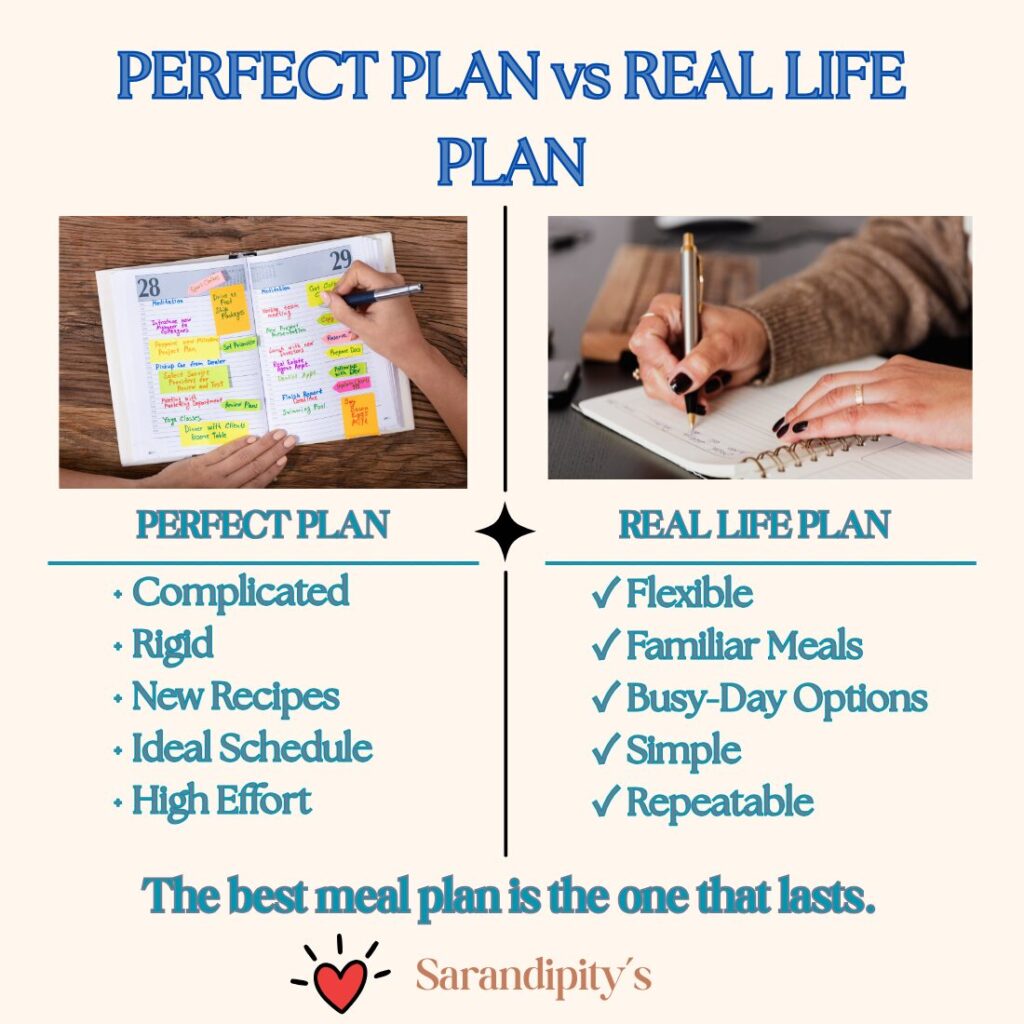
- simple
- flexible
- realistic
- repeatable
- built around family favorites
Not perfection.
Not complexity.
Not endless variety.
Consistency.
Because the best meal plan isn’t the one that looks impressive on paper.
It’s the one that still works three months from now.
Final Thoughts
Most meal plans don’t fail because people are lazy.
They fail because they’re trying to force real life into a system that wasn’t built for reality.
A good meal plan adapts.
It changes when schedules change.
It flexes when life gets busy.
It helps on hard days.
It makes dinner easier.
And honestly, that’s enough.
The goal was never to create a perfect meal plan.
The goal was to create a meal planning system that works for your family.