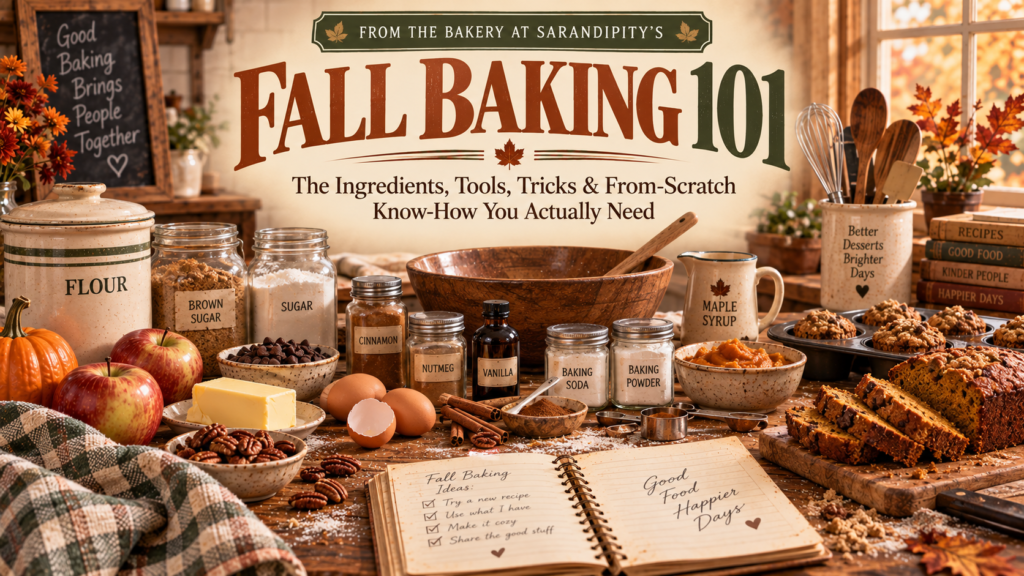
Fall Baking Guide: Everything You Need for Your Coziest Baking Season
The first cool day of the year does something to me.
Suddenly, turning on the oven doesn’t feel like a terrible life decision.
I want cinnamon.
I want apples.
I want pumpkin, maple, pecans and something involving entirely too much brown sugar.
And preferably, I want the whole house to smell like I’ve been far more productive than I actually have.
Welcome to fall baking season.
This isn’t another giant list of basic baking rules because I’ve already got one of those.
If you’re new to baking—or need to know why your cookies keep spreading, whether you actually need a stand mixer or what the hell baking soda is doing in your cake—start with my Baking 101 guide.
This guide is specifically about baking in the -Ber months.
We’re stocking the fall pantry, talking apples and pumpkin, mixing our own fall spices, figuring out substitutions and making one ridiculously easy Cinnamon Roll Apple Bake before we’re done.
Let’s turn on the oven.
What Should You Keep on Hand for Fall Baking?
You don’t need to buy every ingredient with a pumpkin on the package just because September happened.
Start with your normal baking staples:
- All-purpose flour
- Granulated sugar
- Brown sugar
- Powdered sugar
- Butter
- Eggs
- Milk
- Vanilla extract
- Baking powder
- Baking soda
- Salt
Those ingredients will get you surprisingly far.
Then add a small collection of seasonal ingredients that can turn basic cakes, cookies, muffins, breads and cobblers into something that tastes like fall.
Cinnamon
If you’re only buying one fall spice, make it cinnamon.
It works with apples, pumpkin, pears, pecans, maple, chocolate, caramel, sweet potatoes and approximately everything else we’re about to bake.
And don’t limit cinnamon to recipes specifically labeled “fall.”
Add it to:
- muffins
- pancakes and waffles
- French toast
- quick breads
- coffee cakes
- oatmeal
- cookie dough
- crumb toppings
- baked fruit
I buy the bigger container.
We are not measuring fall cinnamon with our hearts and then pretending that tiny spice jar was going to last until Christmas.
Nutmeg
Nutmeg is warmer, stronger and a little more distinctive than cinnamon.
A little goes a long way.
It’s especially good with pumpkin, apples, custards, cream sauces, bread pudding and warm spice blends.
If you’ve never used freshly grated whole nutmeg, it’s worth trying eventually. But ground nutmeg from the grocery store will make perfectly good dessert.
We’re baking, not auditioning for a cooking show.
Ginger
Ground ginger brings warmth with a little bite.
It’s particularly useful in pumpkin desserts, gingerbread-style recipes, spice cakes and fall spice blends.
Cloves
Cloves are powerful.
Use them carefully unless you want your pumpkin bread to taste like it lost a fight with a Christmas candle.
They’re fantastic in small quantities with pumpkin, apples, ginger, cinnamon and molasses.
Make Your Own Fall Spice Blends
You can buy fall spices in one of those tiny little jars—or spend five minutes mixing a full bottle that’ll actually get you through baking season.
Homemade Pumpkin Pie Spice
Equipment
- measuring cups
- Measuring spoons
- Small mixing bowl
- whisk
- funnel optional
- spice jar with lid clean and dry – 8 ounces
Ingredients
- 1/2 cup ground cinnamon
- 1/4 cup ground ginger
- 2 tbsp ground nutmeg
- 1 tbsp ground cloves
- 1 tbsp ground allspice
Instructions
- Add the cinnamon, ginger, nutmeg, cloves and allspice to a medium mixing bowl.
- Whisk thoroughly until the spices are evenly distributed and the mixture is uniform in color.
- Transfer the mixture to a clean, completely dry 8-ounce-capacity spice jar. A small funnel makes this considerably less messy.
- Seal tightly and label the jar Pumpkin Pie Spice, preferably with the date you mixed it.
- Store in a cool, dry, dark cabinet away from heat and moisture.
- Shake the bottle before using if the spices have settled.
- Use in any recipe calling for pumpkin pie spice, measuring the amount specified by the recipe.
Notes
And no, pumpkin pie spice does not contain pumpkin.
Apparently that needed saying somewhere on the internet.
Homemade Apple Pie Spice
Homemade Apple Pie Spice
Equipment
- measuring cups
- Measuring spoons
- Small mixing bowl
- whisk
- Funnel, optional
- spice jar with lid clean, dry, 8-ounce
Ingredients
- 2/3 cup ground cinnamon
- 3 tbsp ground nutmeg
- 2 tbsp ground ginger
- 1 tbsp ground allspice
Instructions
- Add the cinnamon, nutmeg, ginger and allspice to a mixing bowl.
- Whisk thoroughly until all the spices are evenly distributed.
- Transfer the blend to a clean, completely dry 8-ounce-capacity spice jar.
- Seal tightly and label the jar Apple Pie Spice with the date.
- Store in a cool, dark, dry cabinet away from heat and moisture.
- Shake before using if the mixture has settled.
- Use wherever a recipe calls for apple pie spice, or start with a small amount when adding it to recipes that don't specify a quantity.
Notes
Adjust it to your taste.
That’s one advantage of making your own blends: if you hate cloves or want enough cinnamon to frighten somebody, nobody can stop you.
Stock These Fall Baking Extras
Once you’ve got the spices covered, these are the ingredients I like having around during the -Ber months.
Brown Sugar
Yes, brown sugar is a year-round baking staple.
But fall is when it really starts earning its shelf space.
Brown sugar is perfect for:
- apple crisp
- pecan desserts
- caramel flavors
- pumpkin breads
- cookies
- cinnamon rolls
- crumb toppings
- bread pudding
And if you run out?
You can make brown sugar yourself.
→ Out of brown sugar? Learn how to make your own brown sugar at home.
Pumpkin Puree
Keep a few cans of 100% pumpkin puree in the pantry.
Pumpkin works in far more than pie.
Use it in:
- muffins
- breads
- cakes
- cookies
- pancakes
- cinnamon rolls
- brownies
- cheesecake
- bread pudding
It also adds moisture to baked goods, which is why you’ll sometimes see it used in ridiculously simple shortcut recipes.
Pumpkin Puree vs. Pumpkin Pie Filling
These are not the same thing.
Pumpkin puree is pumpkin.
Pumpkin pie filling has already been sweetened and seasoned.
If a recipe calls for pumpkin puree and you accidentally grab pie filling, you’ve introduced extra sugar and spices the recipe wasn’t formulated around.
Check the label.
What Do You Do With Leftover Pumpkin Puree?
You can add leftover pumpkin to:
- oatmeal
- pancakes
- waffles
- smoothies
- muffins
- quick bread
- French toast batter
- soup
- pasta sauce
- feed it to your furry friend (pumpkins are fabulous for doggos, whether as a topper to their regular food or turned into a yummy fall treat).
You can also portion and freeze it for another recipe.
Apples
If there’s one ingredient that owns fall baking, it’s probably the apple.
They’re inexpensive when they’re in season, easy to find and ridiculously versatile.
But some apples bake considerably better than others.
What Are the Best Apples for Baking?
You generally want an apple that can handle heat without immediately turning into applesauce.
Good baking choices include:
- Granny Smith — tart, firm and widely available.
- Honeycrisp — sweet-tart with good flavor and texture.
- Braeburn — balanced sweetness and acidity.
- Pink Lady — crisp with a sweet-tart flavor.
- Jonagold — sweet with enough tartness to stay interesting.
One of my favorite tricks is using more than one variety.
Mix a tart Granny Smith with a sweeter apple and your filling gets more interesting without requiring anything complicated.
Don’t Waste the Apples
If you’ve got apples going soft on the counter, bake them.
Slightly imperfect apples are excellent candidates for:
- apple crisp
- cobbler
- muffins
- bread
- applesauce
- apple butter
- baked apples
- pie filling
Because throwing away six dollars’ worth of apples while complaining about grocery prices seems counterproductive.
Pears
Pears don’t get nearly enough attention during fall.
They work beautifully with:
- cinnamon
- ginger
- maple
- brown sugar
- pecans
- caramel
Use them in crisps, cobblers, cakes and quick breads much like you’d use apples.
They also pair beautifully with apples if you don’t have enough of either fruit for a full recipe.
Pecans
Pecans belong in my fall pantry.
Toast them and they get even better.
Use pecans in:
- cookies
- bars
- coffee cake
- cinnamon rolls
- muffins
- pie
- crisps
- quick breads
If you’re adding nuts to a recipe that doesn’t specifically call for them, don’t get carried away. Too many additions can change the structure of batters and doughs.
Maple Syrup
If you’re baking with maple syrup, use pure maple syrup when the maple flavor actually matters.
Pancake syrup and pure maple syrup aren’t the same ingredient.
Maple works particularly well with:
- pecans
- apples
- pumpkin
- cinnamon
- brown sugar
- oatmeal
And it makes a ridiculously easy glaze when combined with powdered sugar and a little milk.
Caramel
Caramel + apples.
Caramel + pears.
Caramel + pecans.
Caramel + chocolate.
Caramel + spoon.
I’m not judging.
Store-bought caramel sauce is an easy shortcut, especially when you’re adding a drizzle rather than building the dessert around the caramel itself. Homemade caramel is absolutely worth learning too—and once you’ve made it a few times, it’s far less intimidating than it looks. Just remember that molten sugar gets extremely hot, so this is one recipe where winging it is a terrible plan.
Chocolate
Chocolate doesn’t stop being useful because we’re baking with apples and pumpkin.
Dark, semisweet and milk chocolate all pair beautifully with fall flavors.
Try chocolate with:
- pumpkin
- cinnamon
- pecans
- caramel
- peanut butter
- coffee
- oatmeal
Chocolate doesn’t stop being useful just because fall is dominated by apples and pumpkin. Baking chocolate, cocoa powder, chocolate chips and chocolate bars all behave a little differently, though, so make sure you’re using the type your recipe actually calls for.
Fall Baking Doesn’t Have to Mean Pumpkin Everything
I like pumpkin.
I do.
But fall has more than one personality.
If you’re tired of pumpkin spice by October 3, bake with:
- apples
- pears
- maple
- pecans
- caramel
- brown butter
- cinnamon
- chocolate
- cranberries
- sweet potatoes
- molasses
You can make something taste like fall without putting pumpkin in it.
Promise.
Easy Fall Baking Substitutions
You start making something.
You discover you’re missing an ingredient.
We are not automatically putting on shoes and driving to the store.
Out of Brown Sugar? Don’t Go to the Store.
If you’ve got granulated sugar and molasses, you’ve already got brown sugar—you just haven’t mixed it together yet.
Even better, you get to decide whether you’re making light or dark brown sugar.
Homemade Brown Sugar
Equipment
- medium mixing bowl
- measuring cups
- Measuring spoons
- fork, sturdy spoon, hand mixer, or food processor
- airtight storage container
Ingredients
Light Brown Sugar
- 2 cups granulated sugar
- 2 tbsp unsulphured molasses
Dark Brown Sugar
- 2 cups granulated sugar
- 4 tbsp unsulphured molasses
Instructions
- Add 2 cups granulated sugar to a medium mixing bowl.
- For light brown sugar, add 2 tablespoons molasses. For dark brown sugar, add 4 tablespoons molasses.
- Mix thoroughly until the molasses is completely incorporated and the sugar is evenly brown with no large streaks or clumps remaining.
- A fork or sturdy spoon works, but a hand mixer or food processor makes larger batches considerably faster.
- Use immediately or transfer to an airtight container for storage.
- Measure homemade brown sugar the same way you would commercial brown sugar. If your recipe calls for packed brown sugar, pack the homemade version into the measuring cup too.
Notes
Light vs. dark brown sugar
The difference is simple: dark brown sugar contains more molasses. Make whichever version your recipe calls for—or whichever one you prefer when the distinction isn’t critical.Don’t panic when you start mixing
At first, the molasses will form sticky little clumps and you’ll wonder whether I’ve ruined perfectly good sugar. Keep mixing. It comes together.Storage
Store homemade brown sugar in a tightly sealed airtight container to help prevent moisture loss and hardening. If it does harden, that doesn’t automatically mean it’s spoiled. The bigger issue is usually lost moisture. 1 cup light brown sugar:1 cup granulated sugar + 1 tablespoon molasses 1 cup dark brown sugar:
1 cup granulated sugar + 2 tablespoons molasses
Wait—why molasses and not maple syrup?
They’re both dark, pourable sweeteners, but that’s about where the similarity ends. They taste different, behave differently in recipes and aren’t automatically interchangeable. I’m breaking down molasses vs. maple syrup separately because knowing which bottle you need can make a pretty big difference in baking.
No Buttermilk?
For approximately 1 cup:
Add 1 tablespoon lemon juice or white vinegar to your measuring cup, then add enough milk to reach 1 cup total.
Let it sit for 5–10 minutes.
It works as an acidic milk substitute in many everyday baking recipes.
No Pumpkin Pie Spice?
Use the homemade blend above.
No Apple Pie Spice?
Same deal.
Make it.
No Pecans?
Depending on the recipe, walnuts can often step in.
Or leave the nuts out entirely if they’re simply an add-in rather than structurally important.
No Heavy Cream?
Depends on what you’re making.
A substitute that works in a sauce may not whip into whipped cream.
That’s why we’re creating a dedicated Heavy Cream Substitute freebie instead of pretending one substitution works everywhere.
What Can I Use Instead of Heavy Cream?
No Powdered Sugar?
You can make that too.
How to Make Powdered Sugar
See the pattern?
A surprisingly large portion of “I’m out of something” does not actually require leaving the house.
A Few Fall Baking Tips That Make a Difference
Fall baking doesn’t require a different rulebook, but a few things come up more often.
Fresh Fruit Adds Moisture
Apples, pears and other fruit release liquid while baking.
Follow recipes carefully when it comes to thickeners such as flour or cornstarch.
If you randomly double the fruit because fruit is healthy and therefore rules don’t apply, don’t be surprised when your crisp becomes soup.
Pumpkin Adds Moisture Too
Pumpkin puree is wet.
Adding extra pumpkin to make something “more pumpkin-y” can completely change the texture.
For stronger pumpkin flavor, you’re often better off adjusting complementary spices rather than dumping in half another can.
Toast Your Nuts
A few minutes of toasting can dramatically improve the flavor of pecans and walnuts.
Watch them closely.
There’s a surprisingly short distance between:
“Oh, those smell amazing.”
and
“Well, shit.”
Don’t Overdo the Spices
Fall spices should taste warm.
Your dessert shouldn’t taste like you licked the seasonal aisle at a craft store.
Start with a balanced recipe and adjust later if you want stronger spice.
Serve Some Things Warm
Apple crisp.
Bread pudding.
Cobbler.
Skillet cookies.
Cinnamon rolls.
Some desserts were simply meant to be eaten while they’re still warm enough to make the ice cream melt.
I don’t make the rules.
The Easiest Fall Dessert You’re Making This Week
And now we bake something.
This recipe is exclusive to the Bakery blog and doesn’t appear in Easy Fall Baking or Baked for Fall.
That means if you’ve got both books, congratulations.
You just found recipe #31 in our fall baking collection.
Cinnamon Roll Apple Bake
Ingredients
- 2 medium apples peeled, cored, and chopped
- 2 tbsp butter melted
- 2 tbsp brown sugar packed
- 1 tsp ground cinnamon
- 1/4 tsp ground nutmeg
- 1 can refrigerated cinnamon rolls with icing or use homemade
- 1/4 cup chopped pecans optional
Instructions
- Preheat the oven to 350°F.
- Lightly grease an 8×8-inch baking dish.
- Add the chopped apples to the dish.
- Drizzle with melted butter, then sprinkle with brown sugar, cinnamon and nutmeg. Toss until the apples are evenly coated.
- Separate the cinnamon rolls and cut each roll into quarters.
- Scatter the cinnamon-roll pieces loosely over the apples. Don't pack them tightly together—the dough needs room to bake through.
- Sprinkle with pecans if using.
- Bake for 30–35 minutes, or until the cinnamon-roll pieces are golden brown and cooked through and the apples are tender.
- Let the bake cool for about 5 minutes.
- Drizzle the included icing over the warm cinnamon rolls.
- Serve warm.
Notes
MAKE IT EVEN BETTER
Serve it with vanilla ice cream or add a drizzle of caramel sauce. Or both. We’re already eating cinnamon rolls on top of buttery apples. This isn’t the moment to start pretending we’re restrained.PREFER FROM-SCRATCH?
The refrigerated cinnamon rolls make this ridiculously easy. Use them. But if you’d rather make the whole thing yourself, homemade cinnamon-roll dough or a lightly sweetened homemade biscuit dough can replace the refrigerated shortcut.That’s another skill we’ll be learning inside The Bakery at Sarandipity’s.
I’ll give you the shortcut. I’ll also teach you how to make it yourself.
Want 5 More Easy Fall Desserts?
Sometimes you want to bake.
Sometimes you don’t want baking to become your entire afternoon.
That’s exactly why I made:
EASY FALL BAKING
5 Cozy Desserts for When the Mood to Bake Hits
Inside you’ll get:
- 3-Ingredient Pumpkin Muffins
- Caramel Apple Dump Cake
- Maple Cinnamon Biscuit Bites
- Easy Pumpkin Chocolate Chip Bread
- Brown Sugar Pecan Cookie Bars
They’re completely different from the recipe you just made.
And the whole thing is free.
Ready for the Full Fall Baking Lineup?
I’ve got you there too.
BAKED FOR FALL
25 Cozy Fall Desserts for Crisp Days, Family Nights & Holiday Tables
You’ll find apple crisps, pumpkin favorites, gooey caramel bars, maple-pecan treats, chocolate desserts, bread pudding, cobblers, cinnamon rolls and plenty more reasons to turn on the oven.
And here’s the important part:
There are no repeated recipes between this article, Easy Fall Baking and Baked for Fall.
One exclusive recipe here.
Five free recipes.
Twenty-five recipes in the cookbook.
31 different fall desserts.
Need Help With the Baking Basics?
If terms like cream the butter, room-temperature eggs or don’t overmix still leave you wondering whether everybody else got a baking instruction manual you somehow missed, I’ve got that too.
My Baking 101 guide covers:
baking pantry staples, essential equipment, measuring ingredients correctly, ingredient temperatures, substitutions, troubleshooting and how to start replacing store-bought shortcuts with homemade versions.
Welcome to Fall at the Bakery
You don’t need twelve specialty ingredients.
You don’t need the fanciest mixer.
And you definitely don’t need everything you bake to look like it belongs behind glass in a pastry case.
Stock a few good ingredients.
Learn what they do.
Use the shortcut when you need it.
Learn the homemade version when you want it.
Then turn on the oven and make something worth wandering into the kitchen for.
From The Bakery at Sarandipity’s
Creating big dreams on a small budget.