At some point in life, many people quietly decide:
there is something fundamentally “wrong” with them.
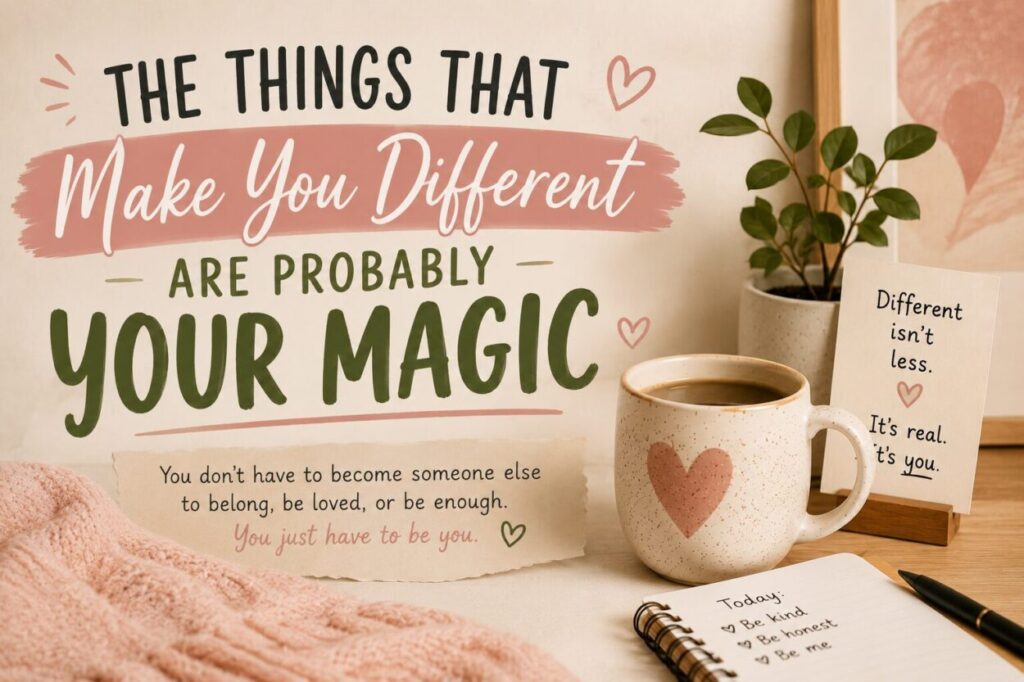
Maybe it’s:
- talking too much
- being too quiet
- feeling emotions deeply
- having awkward humor
- overexplaining things
- being intensely passionate
- needing extra alone time
- struggling socially
- being sensitive
- laughing too loud
- caring too much
- thinking differently
- moving through the world differently
And usually?
Those insecurities don’t appear randomly.
They come from:
- criticism
- rejection
- embarrassment
- comparison
- bullying
- social pressure
- trying to fit into spaces that were never designed for you
So people slowly start:
shrinking themselves.
Softening themselves.
Editing themselves.
Trying to become:
more acceptable.
More normal.
More digestible.
Less “too much.”
But honestly?
A lot of the things people hate about themselves are actually:
the exact things that make them memorable,
interesting,
creative,
comforting,
funny,
safe,
or deeply loved by the right people.
Most People Learn to Hide Themselves Early
A lot of adulthood is:
recovering from the belief that your natural personality was “wrong.”
Because somewhere along the way people were told:
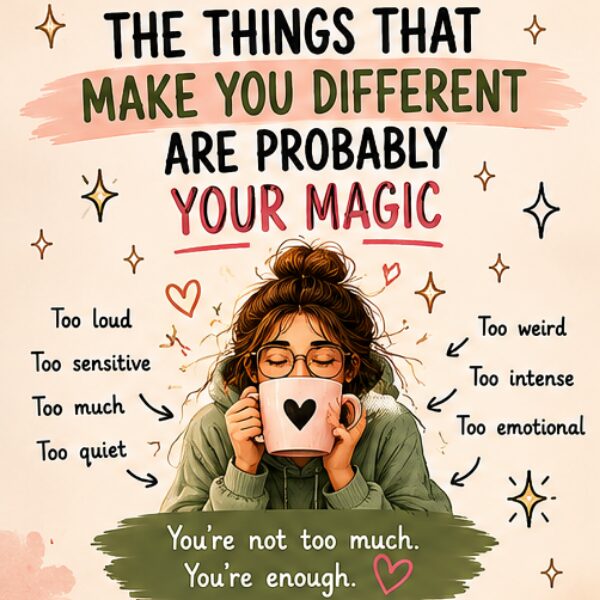
- they were too loud
- too emotional
- too awkward
- too intense
- too sensitive
- too quiet
- too weird
- too passionate
- too different
And over time?
Many people stop expressing themselves naturally because they become afraid of:
- judgment
- rejection
- embarrassment
- being misunderstood
- making others uncomfortable
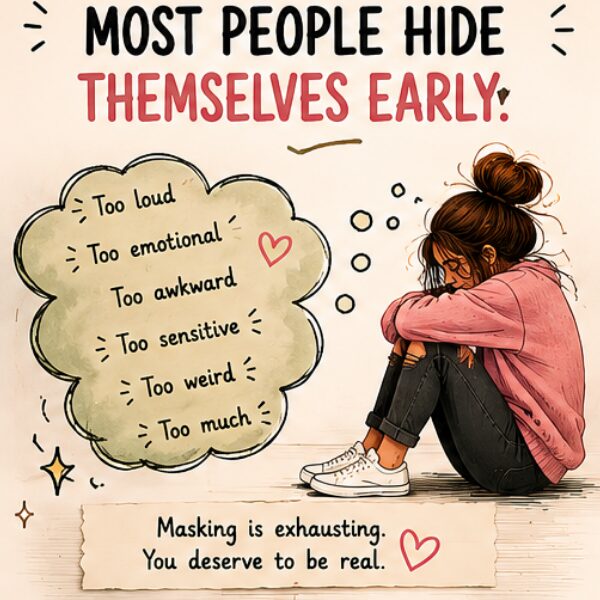
So they begin:
masking.
Masking Is Exhausting
Many adults spend years trying to become:
more socially acceptable versions of themselves.
They rehearse conversations.
Monitor reactions.
Overanalyze interactions.
Tone themselves down.
Force themselves to fit spaces that feel unnatural.
And honestly?
That level of constant self-monitoring is exhausting.
Especially when people don’t even realize they’re doing it anymore.
Your Weirdness Is Probably Somebody’s Favorite Thing About You
This part matters deeply.
The things you notice negatively about yourself are often the things other people experience as:
- comforting
- funny
- genuine
- charming
- safe
- memorable
- lovable
Seriously.
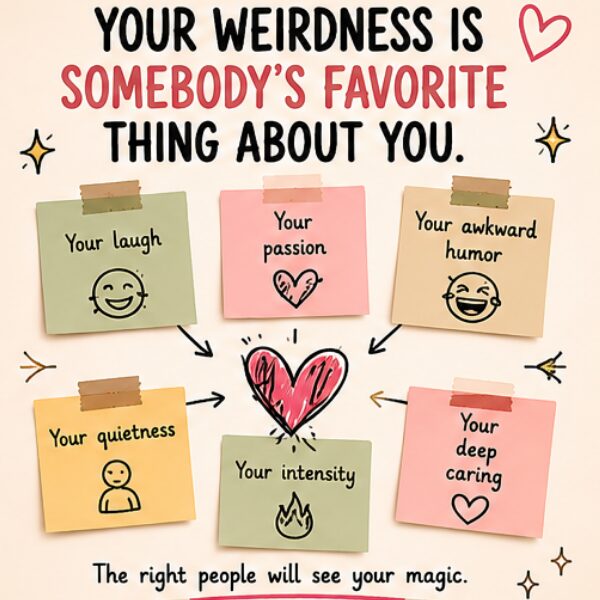
Your weird laugh?
Someone probably loves it.
Your passionate rambling?
Someone finds it energizing.
Your awkward humor?
Someone feels safer because of it.
Your quietness?
Someone experiences it as calming.
Your intensity?
Someone finally feels understood around you.
The traits you criticize most harshly are often:
the traits that make you feel human to other people.
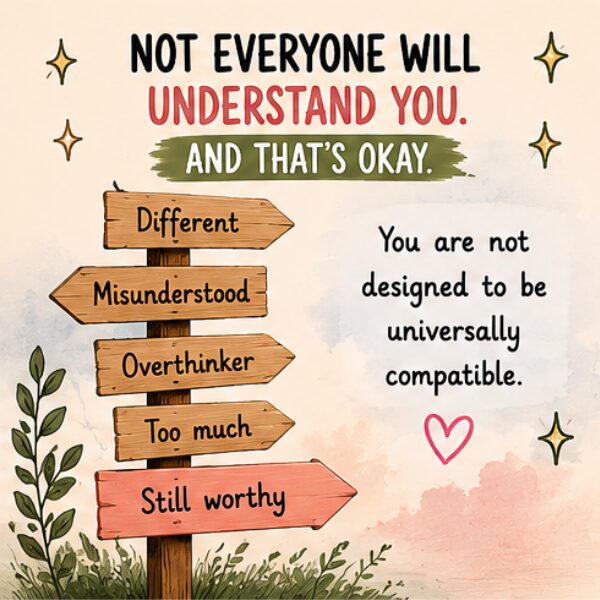
Not Everyone Will Understand You — And That’s Okay
This is one of the hardest adulthood lessons.
Not everyone will:
- “get” you
- appreciate your personality
- understand your humor
- value your communication style
- connect with your energy
And honestly?
That’s normal.
You are not designed to be:
universally compatible.
Some People Will Misunderstand You Completely
You can be:
kind,
genuine,
thoughtful,
and deeply caring
and still be misunderstood by certain people.
That does NOT automatically mean:
you need to become smaller.
Sometimes it simply means:
you are in the wrong environment.
Or around people who do not share your communication style,
emotional depth,
humor,
or values.
That’s important to understand.
The Goal Is Not Universal Approval
A lot of people spend years unconsciously chasing:
universal acceptance.
Trying to become:
- agreeable enough
- attractive enough
- successful enough
- productive enough
- normal enough
- quiet enough
- confident enough
to finally feel:
worthy.
But honestly?
No version of yourself will be universally liked.
And trying to achieve that is emotionally exhausting.
Your People Will Feel Safe Around the Real You
The right people usually connect with:
authenticity.
Not perfection.
Not performance.
Not heavily edited personalities.
People feel safest around:
realness.
Which means:
the more comfortable you become with yourself,
the easier it becomes for the right people to feel comfortable around you too.
That changes everything.
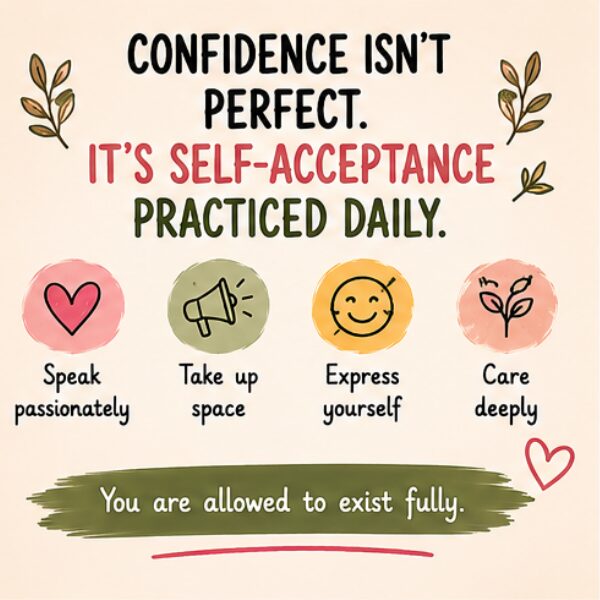
Confidence Is Often Just Self-Acceptance Practiced Repeatedly
A lot of confidence is not:
fearlessness.
It’s:
stopping the constant war against yourself.
It’s learning to think:
“Maybe I don’t need to apologize for existing all the time.”
That takes practice.
Especially for people who spent years:
- minimizing themselves
- people-pleasing
- masking
- hiding parts of themselves
- trying to avoid judgment
You Are Allowed to Take Up Space
You are allowed to:
- speak passionately
- have opinions
- laugh loudly
- be excited about things
- care deeply
- express yourself
- ask questions
- need reassurance
- exist visibly
without constantly apologizing for it.
That matters.
Social Media Quietly Makes This Harder
Modern life constantly encourages comparison.
People scroll through:
highlight reels,
filtered confidence,
carefully curated personalities,
and polished identities
while privately struggling with:
their own insecurity.
Which creates the illusion that:
everyone else feels more confident,
more attractive,
more successful,
more socially comfortable,
more emotionally stable.
They don’t.
Most People Feel Insecure Sometimes
Even people who appear:
confident,
popular,
successful,
or charismatic
still experience:
- insecurity
- self-doubt
- awkwardness
- overthinking
- fear of rejection
Because being human is inherently vulnerable.
That never fully disappears.
Self-Acceptance Usually Happens Slowly
Most people do not wake up one day suddenly:
fully loving themselves.
Usually it happens gradually.
Quietly.
In small moments.
You slowly begin:
- caring less about judgment
- finding people who understand you
- noticing your strengths
- appreciating your quirks
- creating safer environments
- allowing yourself to exist more honestly
And over time:
you become softer toward yourself.
Healing Often Looks Like Relaxing
One of the biggest signs of healing is:
finally feeling safe enough to relax into your own personality.
Not performing constantly.
Not monitoring yourself endlessly.
Not filtering every thought before speaking.
Just:
existing more naturally.
That’s huge.
The Traits You Hate Might Be Connected to Your Strengths
This is important.
A lot of personality traits exist as:
paired systems.
Examples:
- emotional sensitivity often creates empathy
- overthinking often creates awareness
- deep feeling often creates creativity
- intense passion often creates innovation
- quiet observation often creates insight
- humor often develops from emotional intelligence
The same traits that sometimes create insecurity can ALSO create:
connection,
creativity,
comfort,
and brilliance.
Your Difference Is Not Automatically a Flaw
Modern culture often pressures people toward:
sameness.
But honestly?
The people who leave lasting impact are usually:
the people willing to remain themselves.
Not perfectly.
Not fearlessly.
Not effortlessly.
Just honestly.
Finding Your People Changes Everything
A lot of self-hatred comes from:
trying to survive environments where you do not feel emotionally safe.
The right people change that.
Suddenly:
- your humor lands
- your personality relaxes
- your excitement feels welcomed
- your quirks feel normal
- your nervous system softens
And you realize:
you were never “too much.”
You were just trying to fit spaces that were too small for you.
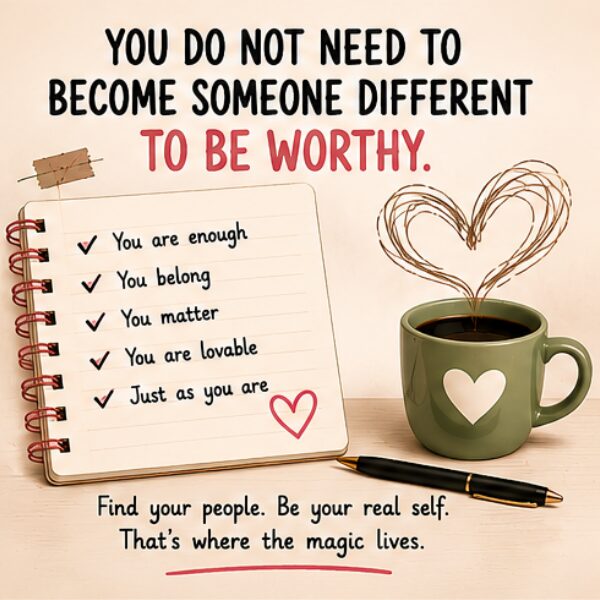
You Do Not Need to Become a Different Person to Be Worthy
This part matters deeply.
You do not need to:
- become quieter
- become cooler
- become less emotional
- become more productive
- become less weird
- become less intense
- become more socially polished
in order to deserve:
love,
friendship,
belonging,
or respect.
You are allowed to:
grow
without hating yourself in the process.
Final Thoughts
If there is something about yourself that you secretly believe makes you:
- difficult
- awkward
- too emotional
- too quiet
- too loud
- too weird
- too intense
- hard to love
- different
please know this:
The things that make you different are often:
the exact things that make you:
human,
memorable,
creative,
comforting,
funny,
safe,
or deeply loved by the right people.
And learning to love yourself is not:
becoming perfect.
It’s slowly realizing:
you were never required to become less yourself to deserve belonging.
You just needed spaces safe enough for the real you to exist inside them.
That takes time.
But it’s worth learning.
Because honestly?
The world does not need:
more identical people pretending to be acceptable.
It needs more humans brave enough to become comfortable being real.